Did you know your data center’s fiber infrastructure could be silently killing your performance? Picture this: servers humming along, but data packets crawling through outdated cabling like rush-hour traffic in a monsoon. If you’re battling scalability woes, skyrocketing energy costs, or downtime nightmares as demands explode, high-density fiber solutions are your lifeline. In this post, we’ll unpack how these game-changers—like advanced fiber optic patch panels—slash congestion, boost speed, and future-proof your setup, saving you headaches (and bucks) down the line.
Why Modern Data Centers Are Fiber-Hungry
Data centers aren’t what they used to be. Back in the day, a few racks handled everything; now, AI, cloud computing, and 5G are shoving petabytes through your doors daily. According to a 2024 Uptime Institute report, 70% of operators cite capacity constraints as their top headache, with fiber bottlenecks at the core.
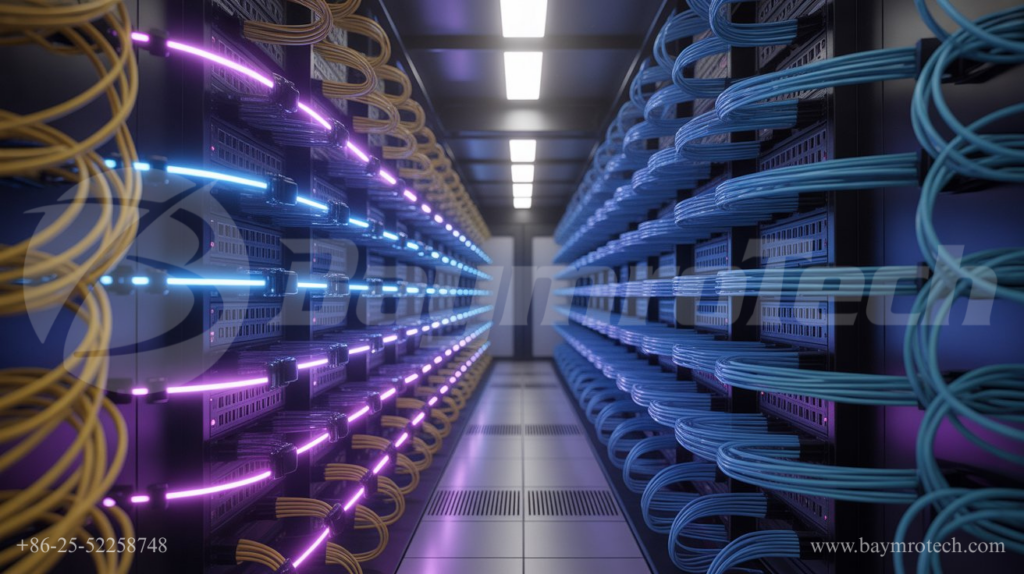
You’ve felt it, right? That moment when a simple upgrade turns into a week-long tangle of cables. High-density fiber solutions flip the script by packing more connections into less space—think 144 fibers in a single panel versus the old 24-fiber clunkers. They’re not just denser; they’re smarter, with modular designs that let you scale without ripping everything apart.
I remember helping a friend retrofit his mid-sized data center in Mumbai. He was drowning in spaghetti wiring until we swapped in high-density trays. Boom—40% more ports, zero downtime. It’s like upgrading from a bicycle to a sports car.
The Star of the Show: Fiber Optic Patch Panel Innovations
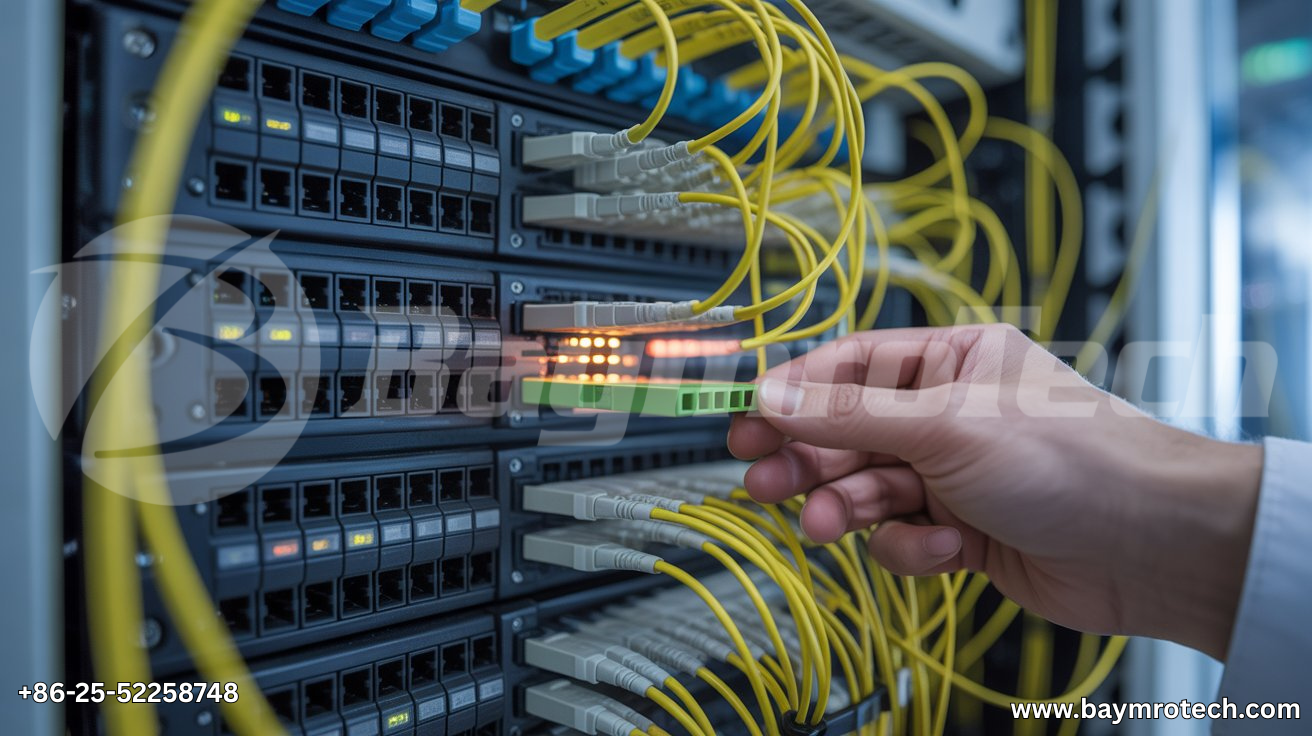
Enter the fiber optic patch panel, the unsung hero of high-density setups. These bad boys organize, protect, and connect your fiber optic cables with surgical precision, handling massive throughput in a footprint that fits your rack. Why obsess over them? In high-density environments, they’re the traffic cops preventing collisions.
Modern panels support MPO/MTP connectors for 40G/100G/400G speeds, sliding effortlessly into 1U or 2U spaces. No more fumbling with individual LC connectors—plug in a trunk, and you’re golden.
- Ultra-High Density: Fit 288 fibers per rack unit (RU), per Lightwave’s 2025 trends analysis.
- Easy Management: Front-access designs mean techs swap ports without contortions (trust me, no one wants a backache at 2 AM).
- Bend-Insensitive Fiber: Reduces signal loss by up to 50%, even in tight bends—perfect for those “accidental” cable tugs.
Humor alert: If your current panel looks like a nest raided by cable-loving raccoons, it’s time for an upgrade. We at Baymro Tech swear by these for our clients; check our fiber optic solutions page for the full lineup.
Tackling Key Challenges Head-On
High-density fiber isn’t a buzzword—it’s battle-tested against real-world pains.
Space Crunch? Solved.
Data centers are real estate goldmines. Traditional setups gobble RU like candy, but high-density cassettes reclaim space. A Cisco Global Cloud Index predicts data center traffic will hit 25.1 zettabytes by 2028— that’s a 3x jump. High-density fiber lets you double capacity without new builds.
Pro tip: Pair with overhead trays for airflow. One client shaved 20% off cooling costs this way.
Scalability Without the Sweat
Ever scaled mid-migration? It’s like assembling IKEA furniture blindfolded. Modular high-density systems use pre-terminated cassettes—snap, connect, done. No fusion splicing marathons.
Reliability Under Fire
Downtime costs $9,000 per minute (Gartner stat). High-density solutions with redundant paths and color-coded panels cut human error by 30%. Add monitoring via Baymro Tech’s network management tools—link it up for real-time alerts.
Relatable story: During a heatwave outage last summer, our high-density deploy kept a Kolkata bank’s trading floor online. The ops guy hugged me (virtually). Empathy check: We get the pressure; these tools are your safety net.
Picking the Right High-Density Setup for You
Not all fibers are created equal. Here’s your no-BS buyer’s guide:
- Assess Your Needs: 100G now? Plan for 800G tomorrow. Tools like FS.com’s bandwidth calculator help.
- Choose Connector Types: MPO for bulk; LC for legacy. Hybrid panels bridge both worlds.
- Prioritize Low-Loss: Aim for ≤0.2 dB insertion loss.
- Test Thoroughly: Use OTDR for certification—don’t skip this, or regret follows.
Budget hack: Start small with a single high-density rack. ROI hits in months via efficiency gains.
Injecting perspective: I’ve seen operators ignore polarity (A-B-C flip-flops)—don’t. Get it right, or watch speeds tank.
Future-Proofing with Emerging Tech
High-density fiber pairs beautifully with co-packaged optics (CPO) and silicon photonics, per IEEE Spectrum. By 2030, expect 1.6T ports standard. Stay ahead: Invest in pluggable modules and AI-driven orchestration.
One laugh: Imagine your data center as a party—high-density fiber is the DJ keeping beats flawless amid the crowd surge.
Wrapping It Up: Ditch the Density Drama
High-density fiber solutions, powered by robust fiber optic patch panels, transform chaos into control—more ports, less space, zero compromises. You’ve got the stats, stories, and steps to upgrade confidently, dodging those capacity crushes and downtime disasters.
Ready to densify? Dive into Baymro Tech’s electric solutions or drop us a line for a custom audit. What’s your biggest data center fiber headache? Share in the comments—we’re all ears!