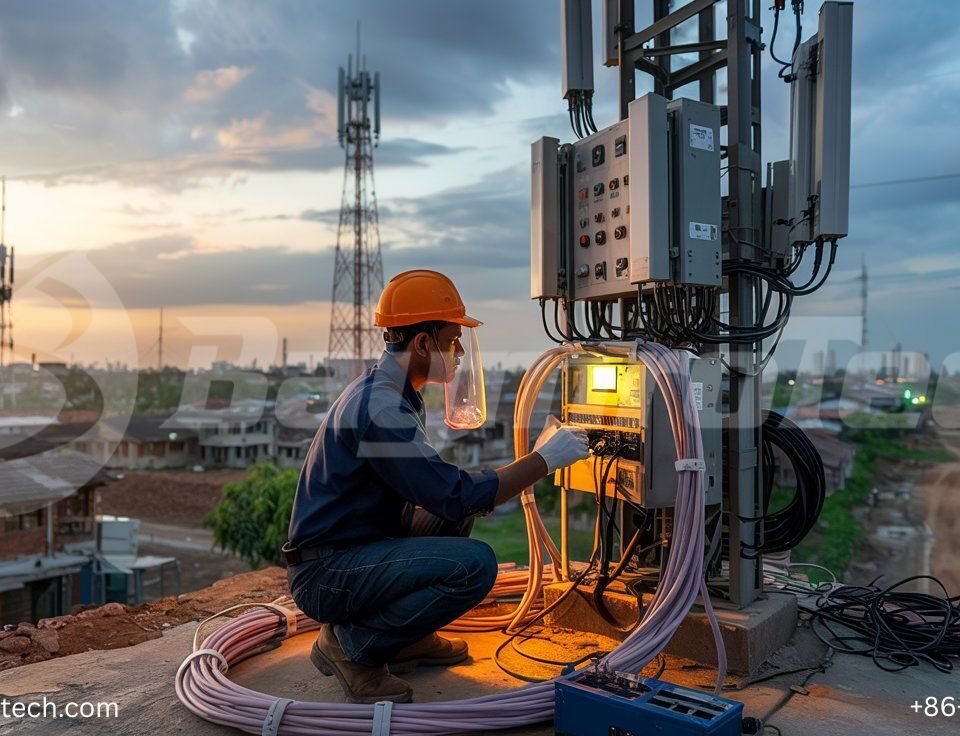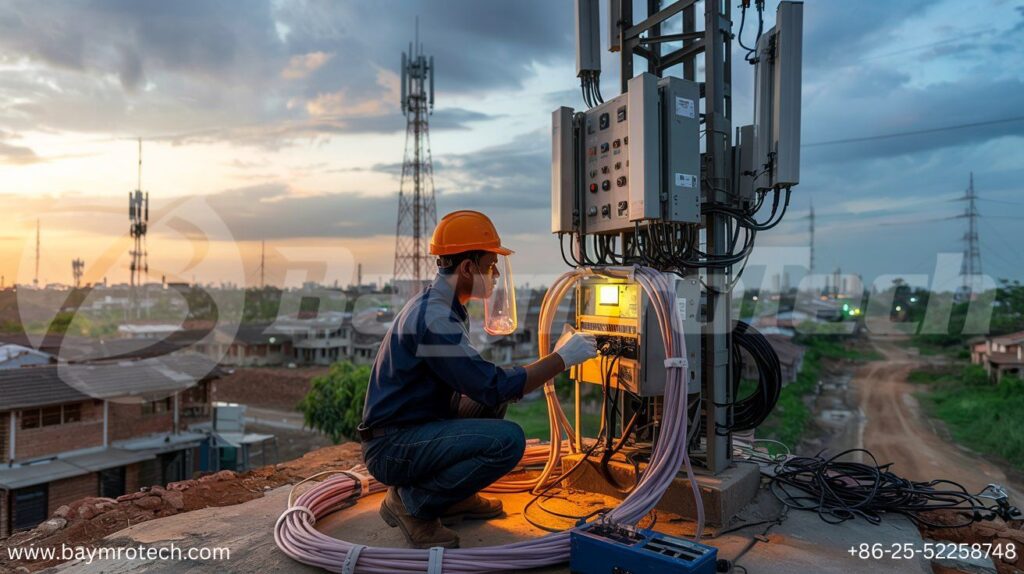

Picture this: You’re knee-deep in a data center upgrade, staring at a tangle of old copper cables wondering if it’s time to rip them all out for shiny new fiber optics. Sound familiar? In the rush toward 5G and beyond, everyone’s hyping fiber as the future, leaving you questioning if copper cable assemblies in telecom networks are yesterday’s news. Spoiler: They’re not obsolete—they’re smarter than ever, especially in hybrid setups. Stick with me, and I’ll show you why ditching copper entirely might cost you more than you think, plus practical ways to keep your network humming efficiently.
The Fiber Hype: Why Everyone’s Talking Past Copper
Let’s be real—you’ve probably heard the buzz. Fiber optic cables promise lightning-fast speeds up to 100 Gbps over long distances with barely any signal loss. According to a 2025 Ericsson Mobility Report, global mobile data traffic exploded by 25% last year alone, pushing networks toward fiber for its bandwidth bonanza.
But here’s the hook: Fiber isn’t a silver bullet. Installation headaches, like bending radius issues and the need for specialized splicing tools, can balloon costs by 30-50% in complex telecom environments, per a Lightwave Online analysis. And what about those legacy systems? Ripping out copper cable assemblies overnight? That’s a budget killer and a downtime disaster.
I remember a project a few years back in Kolkata—yeah, right here in West Bengal—where we upgraded a mid-sized ISP’s backbone. They went all-in on fiber, only to hit snags with last-mile connections in dense urban spots. Frustrating, right? It taught me: Copper’s not dead; it’s the reliable sidekick fiber needs.
Copper Cable Assemblies: The Unsung Heroes That Won’t Quit
Don’t get me wrong—fiber’s king for core backbones. But copper cable assemblies? They’re thriving in telecom networks where economics, reliability, and simplicity rule. Think short-haul links under 100 meters, like inside data centers or access points.
Why still relevant? Here’s the breakdown:
- Cost-Effectiveness Rules: Copper assemblies cost 40-60% less upfront than pure fiber equivalents. A 2024 FS Community report nails it: For 10GBASE-T runs, copper wins on ROI.
- Easy Installation and Maintenance: No fusion splicers needed—just plug and play. Perfect for field techs dodging rain in Mumbai monsoons (ask me how I know).
- Power over Ethernet (PoE) Magic: Copper powers devices like Wi-Fi access points and cameras while transmitting data. Fiber? It laughs at electricity.
- Backward Compatibility: Your existing Cat6/6A setups integrate seamlessly, saving retrofit pains.
Humor me for a sec: Copper’s like that trusty old pickup truck—fiber’s the flashy sports car. The truck hauls heavy loads without breaking the bank, while the sports car sits in the garage during bad weather.
Enter the Hybrid Hero: Copper/Fiber Composite Cable
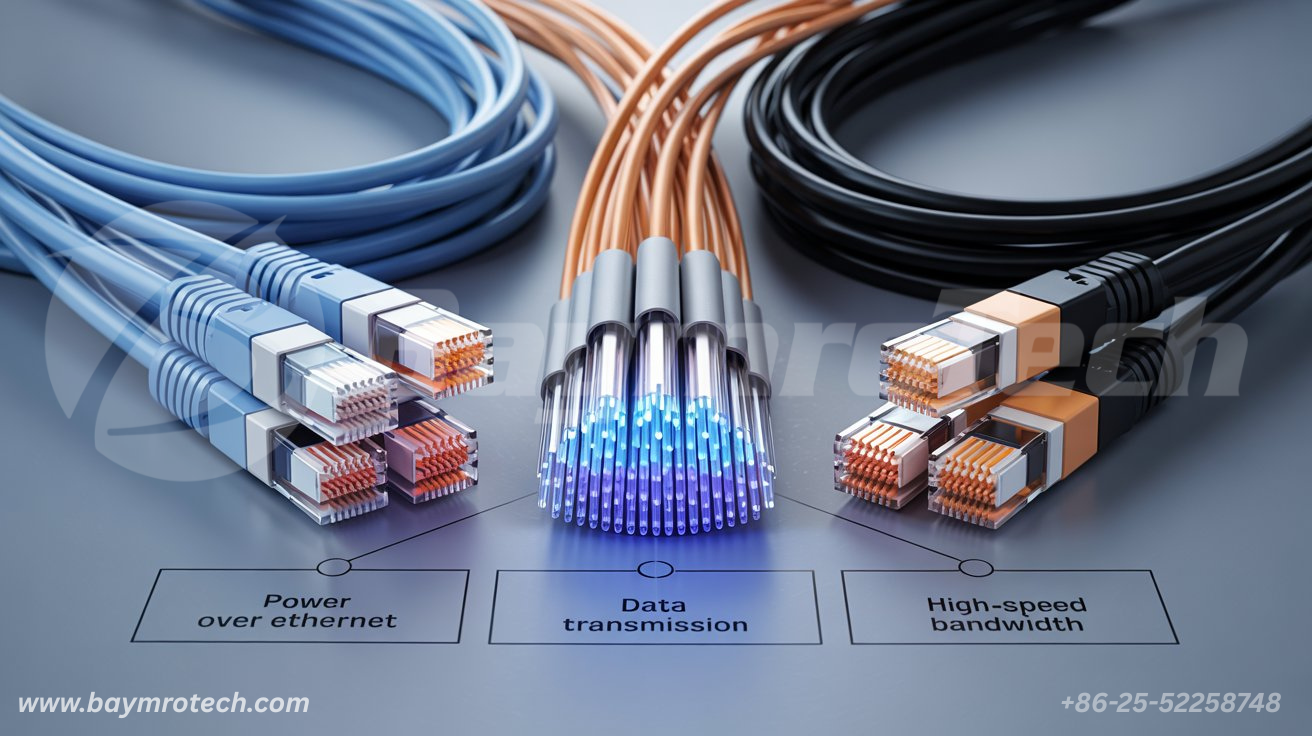
Now, the real game-changer—Copper/Fiber Composite Cable. This hybrid beast combines copper’s toughness with fiber’s speed in one sheath, ideal for telecom networks blending last-mile copper with high-speed fiber cores.
Why obsess over Copper/Fiber Composite Cable? It slashes deployment time by integrating both mediums, reducing points of failure. Imagine running power, data, and ultra-high bandwidth through a single cable—genius for 5G small cells or FTTH drops.
Real-world perks include:
- Seamless Scalability: Start with copper for affordability, upgrade to fiber speeds without rewiring.
- Durability in Harsh Conditions: Withstands EMI better than pure copper and handles bends like a champ.
- Space Savings: One cable does the job of two, perfect for crowded cabinets.
Check out our guide on choosing the right cable assemblies at Baymro Tech for specs that fit your setup. Stats back it: A 2025 Telecoms.com study predicts hybrid cables like Copper/Fiber Composite Cable will capture 25% of new telecom installs by 2028.
When to Stick with Copper (and When to Hybridize)
Still deciding? Ask yourself: Is your network screaming for 400G speeds over kilometers? Go full fiber. But for intra-building Ethernet, PoE-heavy IoT, or budget-constrained upgrades? Copper cable assemblies shine.
Pro tip from the trenches: In India’s booming telecom scene—with 1.2 billion mobile subs per TRAI 2025 data—hybrids like Copper/Fiber Composite Cable bridge urban-rural gaps. We helped a client in Kolkata mix them for a 5G rollout, cutting costs by 35% while hitting 10G speeds.
Compare the contenders:
| Feature | Pure Copper Assemblies | Pure Fiber | Copper/Fiber Composite Cable |
|---|---|---|---|
| Best For | Short runs, PoE | Long-haul backbone | Hybrid telecom flexibility |
| Cost (per 100m) | $50-100 | $200-400 | $120-250 |
| Max Speed | 10G (Cat6A) | 400G+ | 100G+ with copper fallback |
| Install Ease | Easiest | Complex | Moderate |
Dive deeper into our 5G cable solutions at Baymro Tech to see hybrids in action.
Busting Myths: Copper Isn’t “Obsolete”—It’s Evolving
Myth #1: “Copper can’t handle modern speeds.” Nope—Cat8 pushes 40G over 30m.
Myth #2: “5G kills copper.” Laughable. 5G densifies networks, amplifying copper’s role in fronthaul.
With a wink: If copper were obsolete, why did Cisco’s 2025 forecast predict 30% of data center links staying copper-based?
Wrapping It Up: Copper’s Got Legs in Telecom’s Future
Copper cable assemblies aren’t obsolete—they’re essential, especially when paired with innovations like Copper/Fiber Composite Cable. They deliver cost savings, reliability, and hybrid power for telecom networks chasing 5G and 6G without breaking the bank. Ditch the all-or-nothing mindset; embrace the mix.
Ready to future-proof your setup? Contact the Baymro Tech team today for a free consult on copper, fiber, or hybrids. What’s your biggest network headache—drop a comment below, and let’s chat!