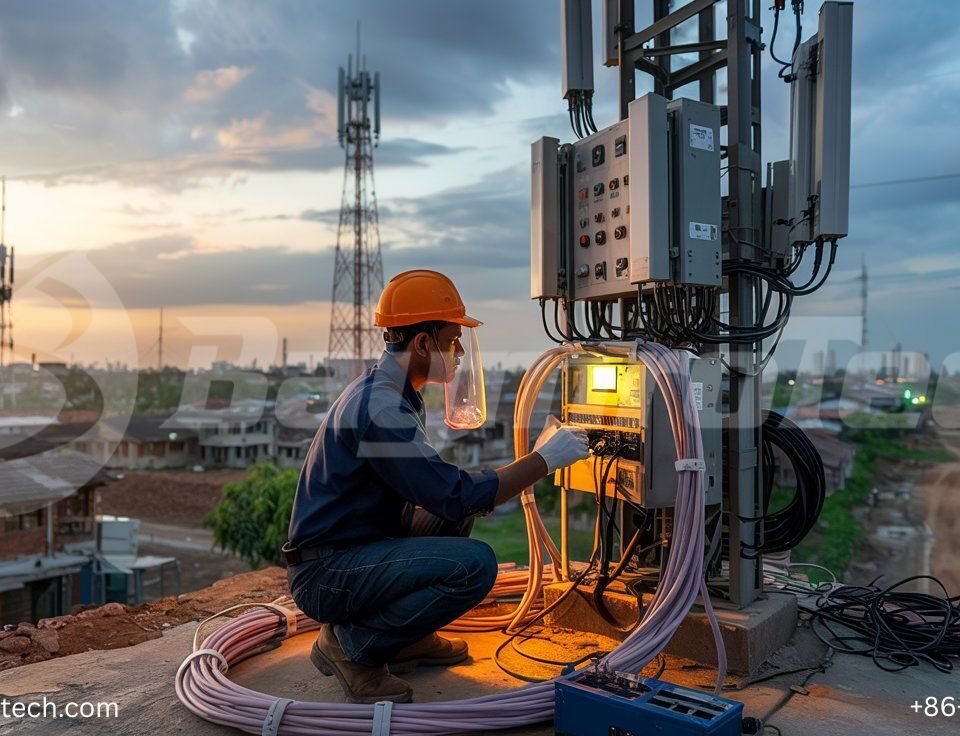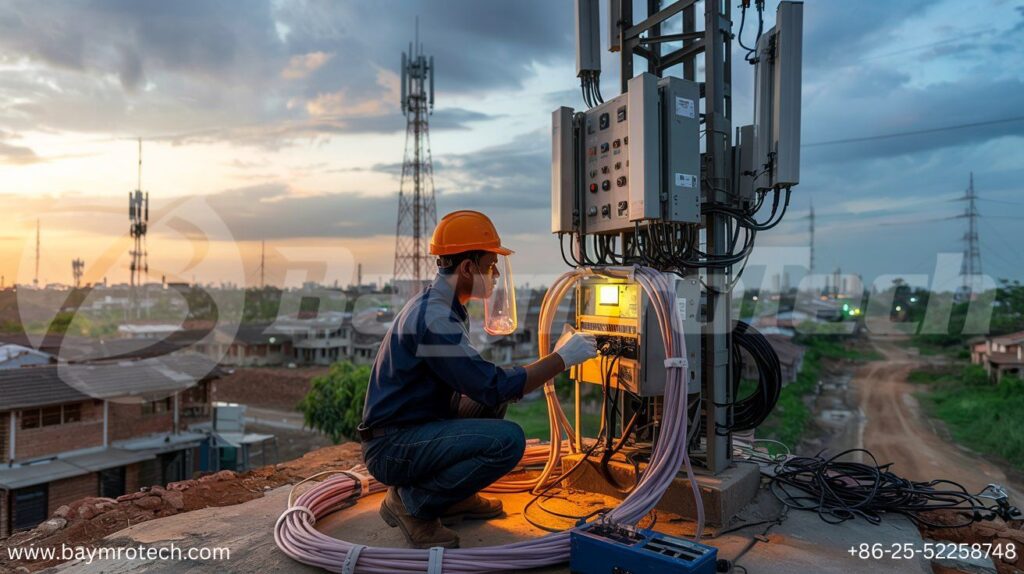
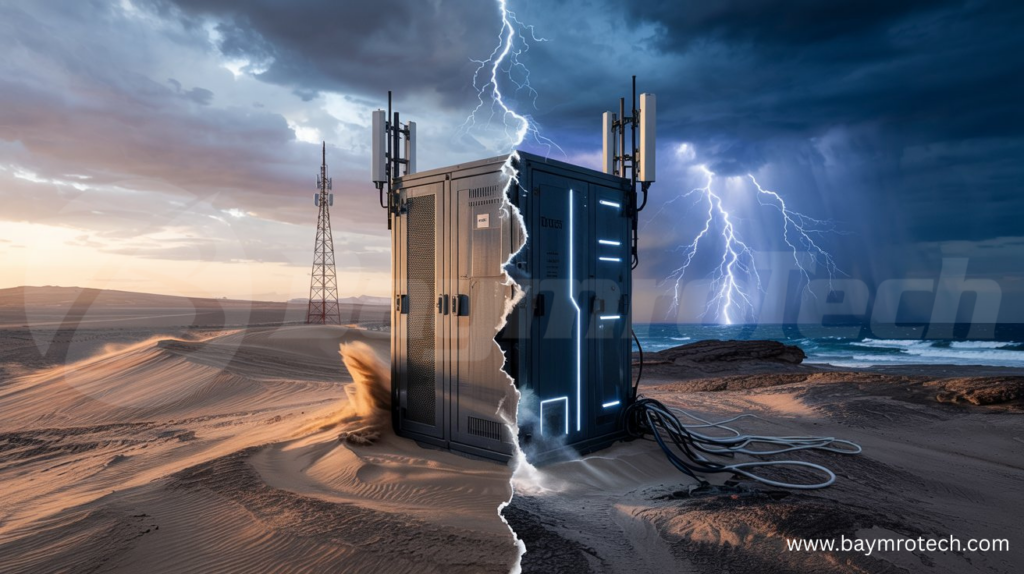
Imagine this: You’re in the middle of a scorching desert rollout or a brutal coastal storm, and your telecom gear inside an outdoor cabinet suddenly fries because it couldn’t handle the heat or salt spray. That’s a nightmare every network engineer dreads—downtime costing thousands per hour. In this post, we’ll dive into smart design, cooling, and protection strategies to keep your outdoor telecom cabinets and shelters bulletproof, so you stay connected without the drama.
Why Outdoor Cabinets Matter
Outdoor telecom cabinets house critical 5G base stations, fiber optic hubs, and edge computing gear in places buildings can’t reach—think remote towers, urban rooftops, or roadside nodes. These enclosures battle sun-baked temps over 120°F (49°C), freezing winters, relentless rain, and even vandalism. Get them right, and they slash maintenance costs by up to 30%; mess up, and you’re looking at frequent failures.
You know the drill: Equipment like routers and amplifiers generates heat like a space heater in a sauna. Poor protection means corrosion, dust-clogged fans, or water ingress turning your investment into scrap. But with clever choices—like pairing robust shelters with solutions from Baymro Tech’s electric enclosures—you turn vulnerabilities into strengths.
Key Design Principles
Design starts with “fit for purpose.” Size your cabinet to leave 20-30% extra space for future upgrades—cramming gear leads to hotspots. Opt for modular layouts: Stackable racks for easy swaps, cable management trays to prevent tangles, and front-access doors for quick tech visits.
- Modular frames: Bolt-together steel or aluminum for shipping ease and on-site tweaks.
- Cable entry points: Sealed glands handle thick bundles, including copper fiber composite cables that blend conductivity with fiber speed.
- Mounting flexibility: Pole, wall, or pad options suit any terrain.
I once saw a team in India skip modularity for a “cheaper” fixed cabinet—six months later, a 5G expansion meant total replacement. Lesson learned: Design for tomorrow, not just today. Check Rainford Solutions’ guide for pro tips on balancing size and scalability.
Material Choices for Durability
Your cabinet’s skin is its first defense. Galvanized steel fights rust like a champ, while aluminum keeps weight down for rooftop installs—perfect for seismic zones. Powder-coated finishes shrug off UV rays, and stainless steel shines in salty coastal spots.
Here’s a quick comparison:
Add anti-corrosion coatings for extra life—think 20+ years without peeling. Funny story: A buddy’s coastal cabinet looked like Swiss cheese after two monsoons until they switched to marine-grade alloys. Pro tip: Pair with Baymro Tech’s IP-rated doors for seamless integration.
Cooling Strategies That Actually Work
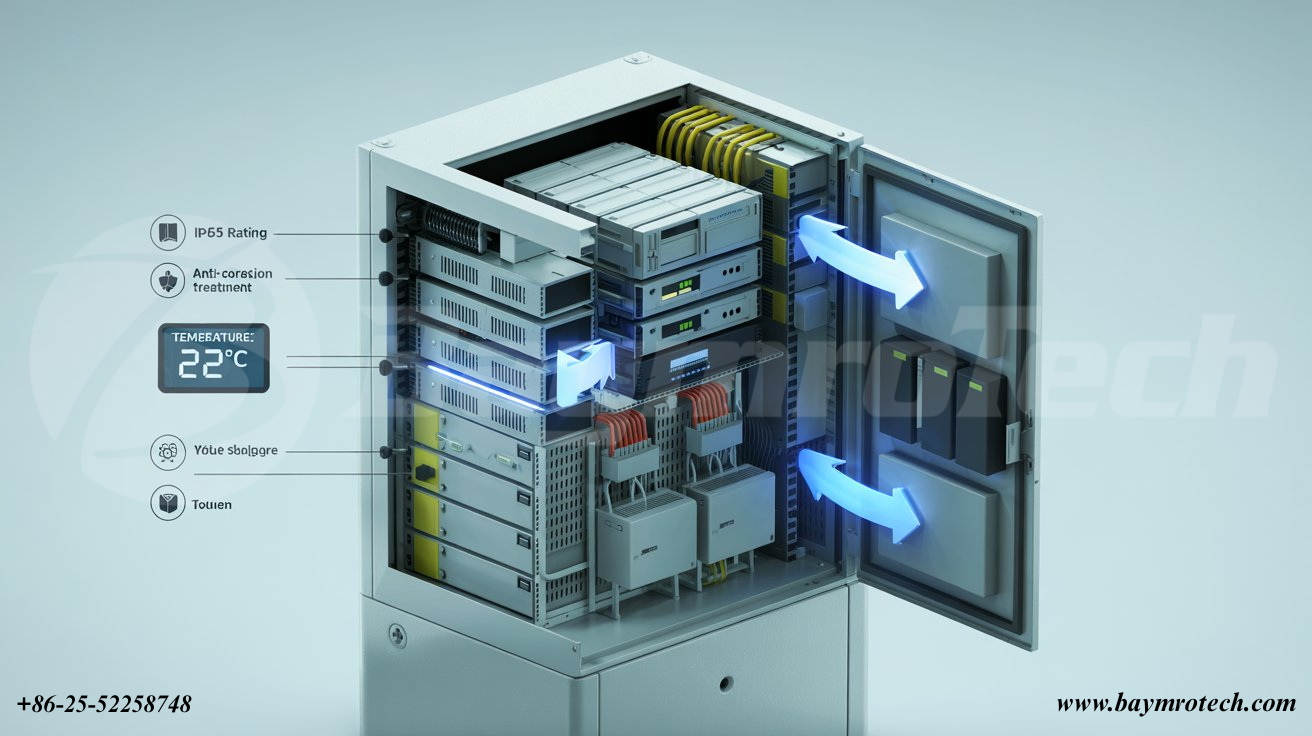
Heat is the silent killer—internal temps must stay under 104°F (40°C), ideally cooler for peak efficiency. Natural ventilation suits low-heat setups, but high-density gear demands more.
- Passive cooling: Vents and heat pipes for mild climates—no power needed.
- Fan-assisted: Filtered fans boost airflow, great for 24/7 uptime.
- Active systems: AC units or heat exchangers for extremes, dropping temps 20-30°F below ambient.
In deserts, DC air conditioners from makers like ESTEL maintain 77°F (25°C) internals even at 104°F outside, sipping solar power. Closed-loop exchangers block dust while transferring heat—ideal for polluted cities. Sustainability bonus: These cut energy use by 40% over old-school AC. For real-world proof, see Thermal Edge’s thermal management insights.
Humor alert: Ever open a hot cabinet? It’s like a pizza oven—your face melts before the gear does. Smart sensors auto-adjust fans or AC, saving bills and headaches.
Protection Against the Elements
Mother Nature doesn’t play fair. Aim for IP55+ ratings: Dust-tight and low-pressure water jets. Weatherproof seals on doors and vents stop rain, while sloped roofs shed snow.
- Sun and heat: Reflective paints or insulation foam inside.
- Cold snaps: Heaters kick in below 32°F to prevent condensation.
- Corrosion: Zinc-rich primers for humid or chemical-heavy zones.
Security layers up: Lockable handles, alarms, even biometric locks. Vandalism? Thick glass windows with anti-shatter film let you peek without prying. In flood-prone areas like parts of India, elevate on plinths and add sump pumps.
Real stat: Proper sealing cuts failures by 50%, per industry reports. Link to Raycap’s AC benefits for why cooling doubles as protection.
Integrating Advanced Cables
Don’t forget connectivity—copper fiber composite cables shine here, merging copper’s power delivery with fiber’s bandwidth in one rugged sheath. They handle bends in tight cabinets without signal loss, perfect for hybrid 5G-fiber setups. Route them through sealed ports to avoid weak points.
Maintenance and Long-Term Wins
Even top-tier cabinets need TLC. Quarterly checks: Clean filters, test seals, monitor temps via IoT sensors. Predictive analytics flag issues early—downtime drops 70%.
Budget hack: Energy-efficient cooling pays back in year one. Empathy check: I get it, juggling CAPEX in tight margins sucks. Start small—upgrade one site, measure ROI, scale up.
Wrapping It Up
Nail design with modular, durable materials; master cooling from passive to AC; lock in protection against weather and threats—you’ll have telecom cabinets that outlast expectations. Your network thrives, costs plummet, and you sleep better.
Ready to fortify your setups? Contact Baymro Tech today for custom shelters, or drop a comment: What’s your toughest outdoor challenge?