
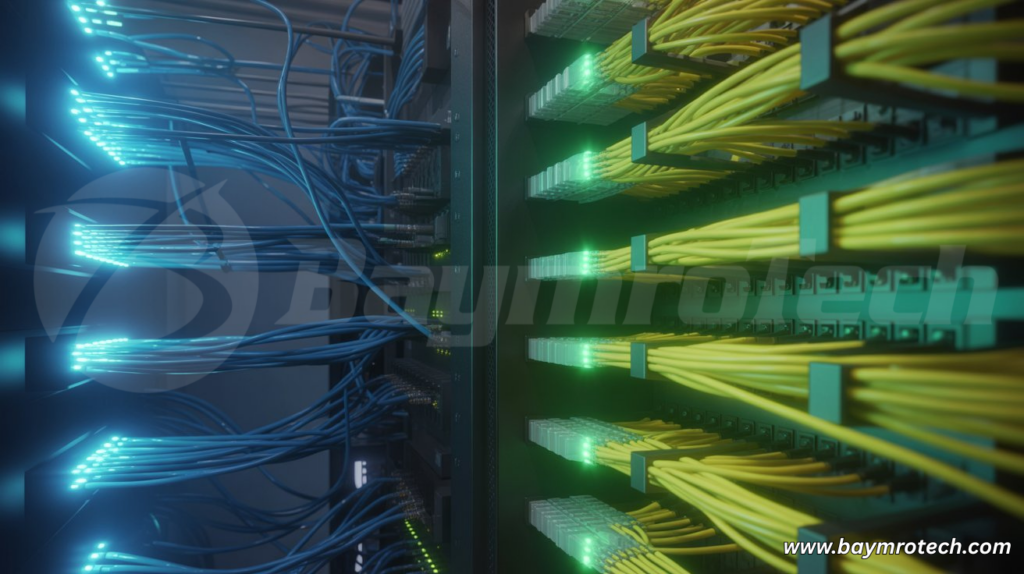
Imagine this: You’re in the middle of a critical video conference, and suddenly your connection lags like a sloth on sedatives. Frustrating, right? That glitch often traces back to your fiber optic patch panel—the unsung hero (or villain) of your network setup. If it’s not up to snuff, you’re inviting slowdowns, errors, and downtime that can cost businesses thousands. In this post, we’ll dive into the key features of a fiber optic patch panel that directly turbocharge your network performance, so you can say goodbye to those headaches and hello to lightning-fast reliability.
Why Fiber Optic Patch Panels Matter More Than You Think
Let’s get real—you probably installed your patch panel years ago and haven’t thought about it since. But here’s the kicker: In today’s data-hungry world, where 5G and cloud computing rule, a subpar panel can bottleneck your entire setup. According to a 2023 report from Lightwave, poor fiber management contributes to 30% of network outages in enterprise environments. Yikes!
Think of your patch panel as the traffic cop at a busy intersection. Get the features right, and data flows smoothly. Skimp on them, and you’re looking at crashes—literally, in terms of packet loss. I’ve been there myself, troubleshooting a client’s setup where a mismatched panel turned their high-speed fiber line into dial-up territory. Spoiler: Swapping it out was a game-changer. Ready to upgrade? Check out our guide to fiber optic cables for the perfect match.
Feature #1: Port Density and Scalability – Don’t Get Caught Short
Ever tried squeezing a family reunion into a studio apartment? That’s what low port density feels like in a growing network. High-quality fiber optic patch panels offer dense configurations—like 24, 48, or even 144 ports in a single rack unit—letting you scale without turning your server room into a spaghetti factory.
- Why it impacts performance: More ports mean fewer jumps between panels, reducing signal attenuation. A study by FS Community shows that optimized density cuts insertion loss by up to 0.2 dB per connection.
- Pro tip: Look for modular designs with hot-swappable cassettes. This lets you expand on the fly, keeping latency low as your team adds IoT devices or remote workers.
Humor alert: If your panel’s as cramped as economy seating on a red-eye flight, your network’s screaming for mercy. Scale smart, and you’ll future-proof your setup.
Feature #2: Connector Quality – The Make-or-Break for Signal Integrity
Connectors are the handshake of your fiber network. A weak grip? Dropped packets and retransmissions galore. Premium fiber optic patch panels use precision-polished connectors like LC, SC, or MPO with APC (Angled Physical Contact) polishing to minimize back-reflection.
Key perks:
- Low insertion loss: Top panels clock in at under 0.2 dB, versus 0.5 dB in budget models—translating to 20-30% better throughput, per Cisco’s fiber optics best practices.
- Durability: Ceramic ferrules withstand 1,000+ mating cycles without degrading.
- Color-coding: Intuitive labels prevent mix-ups, saving you hours of debugging.
Picture this: A friend of mine once plugged an UPC connector into an APC port—boom, 60 dB return loss and a network meltdown during peak hours. Lesson learned: Prioritize panels certified to TIA/EIA-568 standards. Pair it with our rackmount enclosures for bulletproof organization.
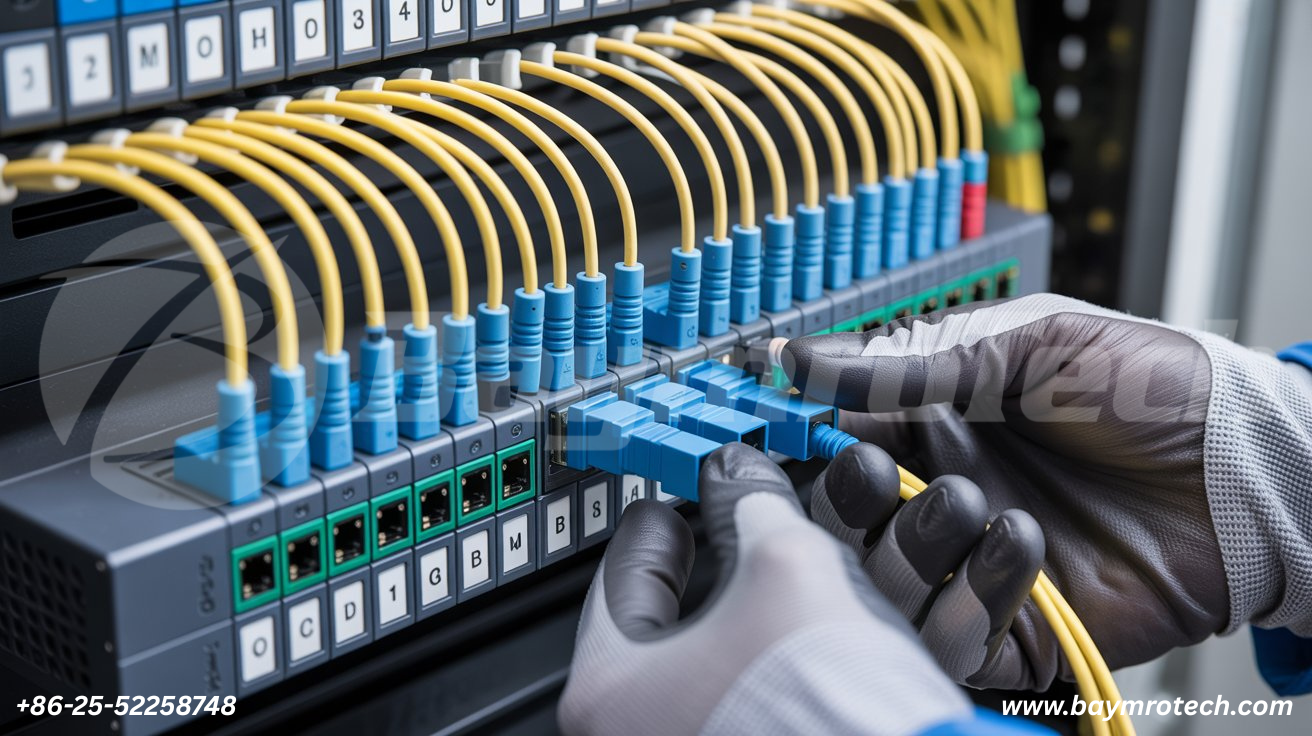
Feature #3: Cable Management and Bend Radius Protection – Taming the Chaos
Nothing kills performance faster than a kinked fiber cable. It’s like stepping on a garden hose—flow stops dead. Elite panels feature built-in radius protectors (typically 30-50mm minimum) and spool guides to keep cables happy and signals crisp.
Here’s why it rocks:
- Reduces macro-bending loss: Exceeding the bend radius spikes attenuation by 0.5 dB or more, as noted in a Fiber Broadband Association whitepaper.
- Easy access: Rear cable management arms and front-facing ports mean quick swaps without disrupting live traffic.
- Dust and strain relief: Sealed designs with grommets block contaminants, extending component life by 2-3x.
I chuckle thinking about my early days cable-wrangling without proper management—looked like a teenager’s bedroom after a party. Invest here, and your uptime soars.
Feature #4: Material Build and Thermal Management – Built to Last Under Pressure
Cheap plastic panels warp under heat; premium ones use rugged steel or aluminum with ventilation slots. Why care? Heat = signal drift. In data centers hitting 40°C, poor thermal design can degrade performance by 15%, experts at Network World warn.
Standout traits:
- Flame-retardant ratings (UL 94 V-0) for safety.
- Anti-vibration mounting to handle rack jostles.
- Labeling windows for quick ID without disassembly.
Real talk: In humid Kolkata server rooms (shoutout to my Baymro Tech crew), we’ve seen plastic panels fail spectacularly. Go metal, stay cool.
Feature #5: Compatibility and Testing Features – Future-Proof Your Investment
A panel that plays nice with multimode OM4/OM5 or singlemode OS2 fibers? Gold. Built-in adapters for 40G/100G transceivers ensure you’re not left behind as speeds climb.
Bonus: Panels with integrated testing ports let you verify continuity on-site, slashing troubleshooting time. Quote from fiber guru Jeff Baur: “Compatibility isn’t optional—it’s the backbone of scalable networks” (via Lightwave).
Common Pitfalls to Dodge for Peak Performance
We’ve all been burned:
- Skipping polarity checks (MPO madness!).
- Ignoring adapter cleanliness—dust is a signal’s worst enemy.
- Overlooking load ratings in high-density racks.
Pro advice: Audit your setup quarterly. It’ll save your sanity.
Wrapping It Up: Elevate Your Network Today
There you have it—the powerhouse features of a fiber optic patch panel that crush network bottlenecks: port density, killer connectors, smart cable management, tough builds, and seamless compatibility. Nail these, and you’ll slash downtime, boost speeds, and sleep better at night.
Ready to level up? Browse our full range of fiber optic solutions at Baymro Tech or drop us a line for a custom quote. What’s your biggest network pain point right now? Share in the comments—I’d love to hear and help!