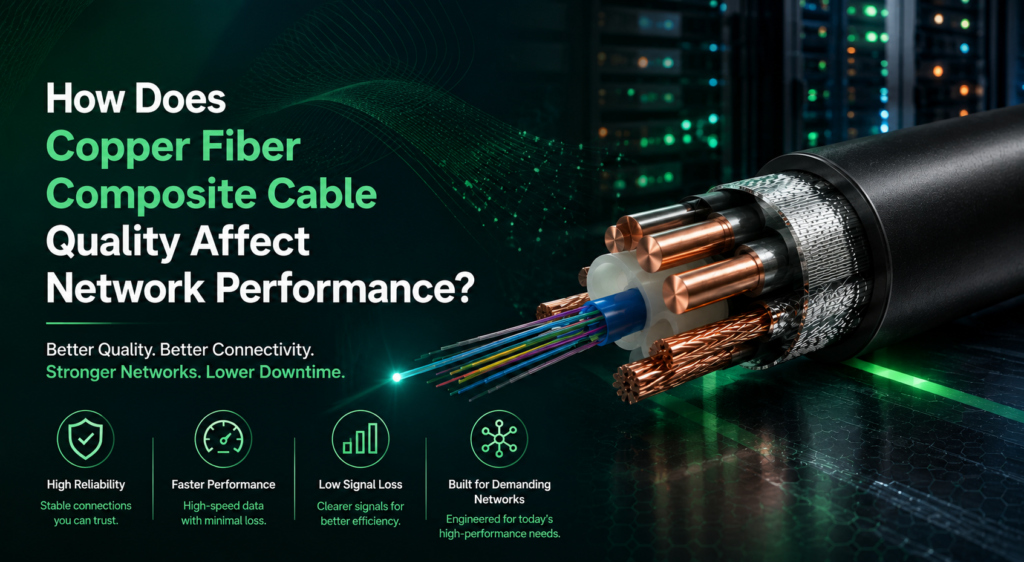
For telecom operators, infrastructure contractors, and network integrators, choosing a copper fiber composite cable is not simply a matter of selecting a cable that combines copper and optical fiber. The internal construction, conductor size, fiber configuration, shielding, jacket material, and mechanical performance all influence how the cable performs after installation.
A cable can meet a basic product description and still be unsuitable for a specific deployment. For example, an undersized copper conductor can create excessive voltage drop over longer distances, while an unsuitable jacket may reduce reliability in outdoor environments. Similarly, the wrong fiber type or fiber count can limit network capacity and make future upgrades more difficult.
This makes copper fiber composite cable quality an important network design consideration. Buyers need to match the cable structure with transmission requirements, power requirements, installation conditions, and the environment in which the cable will operate.
The right selection can improve installation efficiency and long-term reliability, while poor specification can contribute to signal issues, power losses, mechanical damage, maintenance requirements, and higher total cost of ownership.
What Is a Copper Fiber Composite Cable?
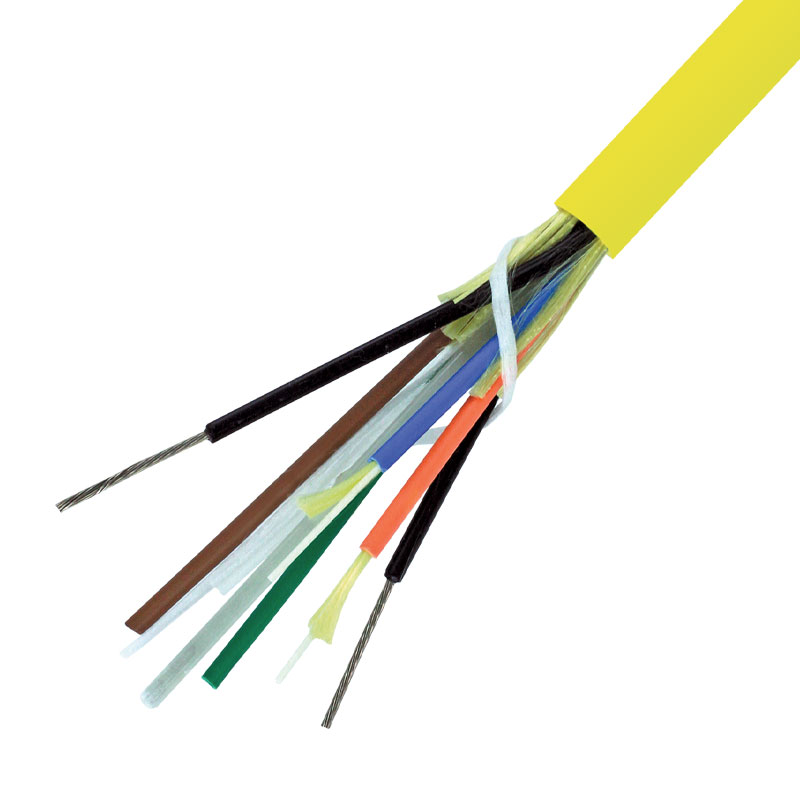
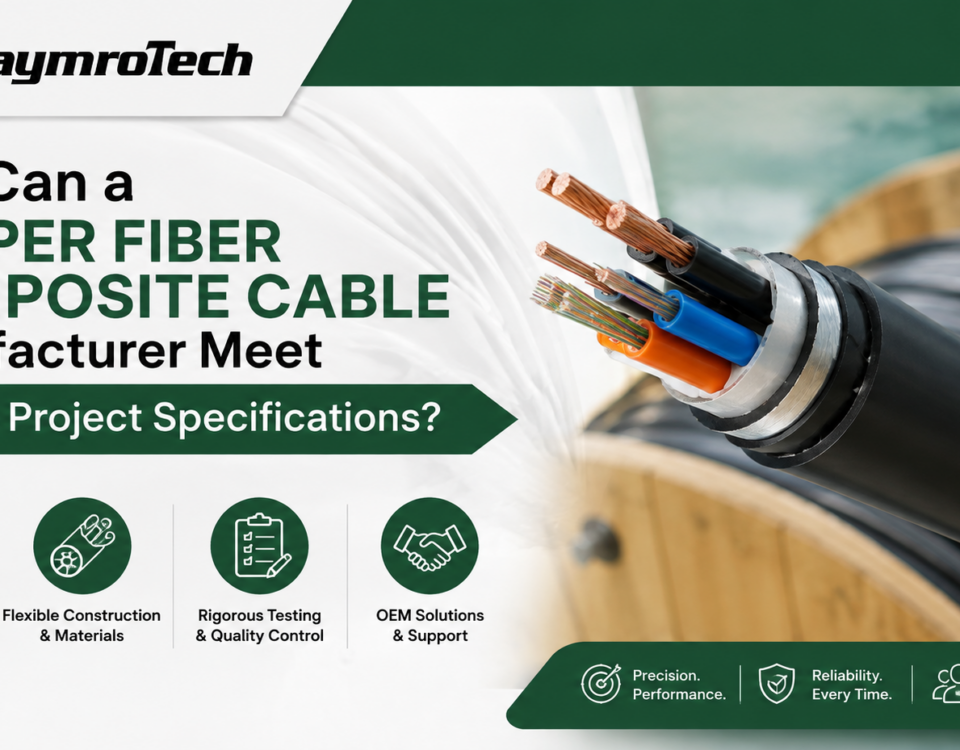
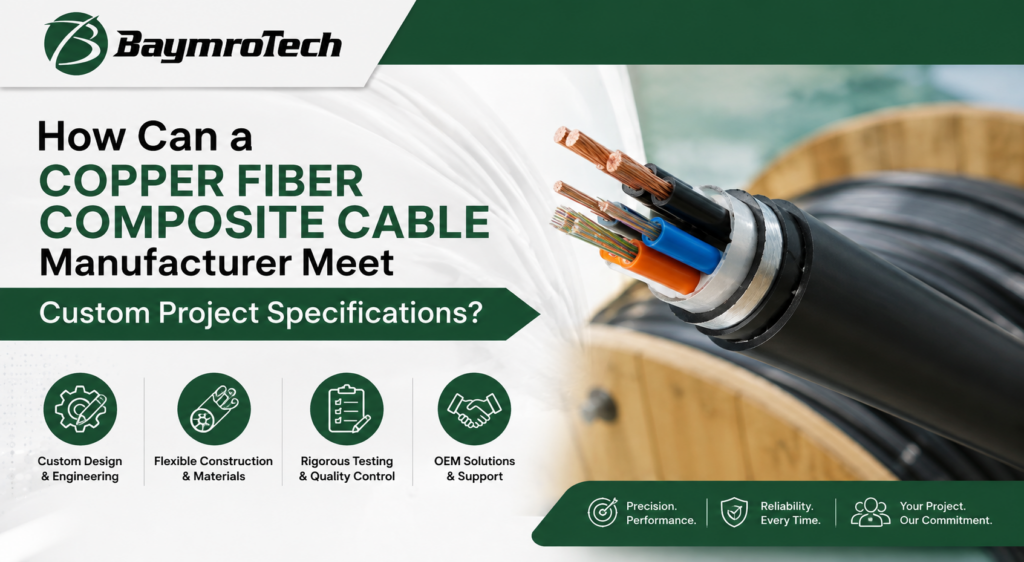
A copper fiber composite cable integrates optical fibers and copper conductors into a common cable structure. The optical fiber is used for high-speed data transmission, while the copper portion can provide electrical power to compatible equipment.
This design is useful where communication and power need to reach the same remote location without deploying completely separate cable systems.
However, composite cable construction varies significantly between applications. The number and type of optical fibers, copper conductor specification, insulation, shielding, strength members, water-blocking elements, and outer jacket can all be customized according to project requirements.
For buyers, the important question is therefore not simply whether a cable is a copper fiber composite cable. The more useful question is whether its technical construction matches the network and installation requirements.
How Does Fiber Type and Fiber Count Affect Cable Selection?
The optical portion of the cable needs to match the transmission architecture of the network.
Single-Mode Fiber
Single-mode fiber is commonly selected for long-distance telecommunications and high-capacity network infrastructure. Its low attenuation and suitability for long transmission distances make it appropriate for many carrier and access network applications.
Multimode Fiber
Multimode fiber can be considered for shorter-distance communication environments, particularly certain enterprise, industrial, and data communication applications.
Fiber Count
Fiber count should be determined by both current network requirements and expected expansion.
A project may require only a limited number of active fibers initially, but selecting an appropriate fiber count can provide additional capacity for future connections, redundancy, or network expansion.
Increasing fiber count also affects cable diameter, construction, handling, and installation requirements. Buyers should therefore avoid selecting fiber count independently from the complete cable design.
Why Does Copper Conductor Size Matter?

The copper conductor is one of the most important technical elements in a composite cable when the cable is designed to carry power.
Conductor size directly influences electrical resistance and voltage drop. Over longer cable runs, an unsuitable conductor size can result in greater voltage loss between the power source and connected equipment.
When selecting conductor specifications, engineering teams should consider:
- Required operating voltage
- Equipment power consumption
- Cable length
- Allowable voltage drop
- Conductor material
- Operating temperature
- Installation conditions
- Required electrical performance
For this reason, copper conductor size should be specified according to the actual power requirement rather than selected simply because a particular cable configuration is commonly available.
For long-distance deployments, voltage-drop calculations are especially important. A cable that works adequately over a short installation may not provide the same electrical performance over a substantially longer route.
How Does Cable Structure Influence Network Reliability?
The internal arrangement of a copper fiber composite cable affects both optical and electrical performance as well as mechanical handling.
A typical construction may include:
- Optical fibers for data transmission
- Copper conductors for power delivery
- Primary and secondary insulation
- Strength members for mechanical protection
- Shielding where required
- Water-blocking or moisture-protection elements
- An outer protective jacket
The exact structure depends on the intended application.
The positioning of optical fibers and copper conductors needs to provide suitable protection during installation and operation. Excessive mechanical stress, poor internal organization, or unsuitable material selection can increase the risk of damage to the cable components.
For projects involving pulling, bending, routing, or repeated handling, buyers should pay attention to the cable’s specified tensile strength, bending characteristics, crush resistance, and overall mechanical construction.
Does Shielding Matter in Copper Fiber Composite Cable?
Shielding requirements depend on the installation environment and the electrical characteristics of the deployment.
In environments with potential electromagnetic interference, a suitable shielding design can provide additional protection for the electrical components. Shielding may also contribute to the cable’s overall mechanical construction depending on its design.
However, shielding should not automatically be treated as a universal requirement. Buyers should consider:
- Electromagnetic environment
- Power characteristics
- Installation proximity to other electrical systems
- Grounding requirements
- Cable construction
- Indoor or outdoor deployment
The objective is to select a shielding configuration that matches the actual installation rather than adding unnecessary construction that could increase size, weight, or cost.
How Should Buyers Select the Right Jacket Material?
The outer jacket protects the cable from the surrounding environment and mechanical exposure.
For indoor applications, jacket requirements may focus on installation flexibility, flame performance, space limitations, and handling characteristics.
Outdoor installations can require stronger environmental protection against:
- Moisture
- UV exposure
- Temperature variation
- Abrasion
- Mechanical impact
- Weather exposure
- Chemical or industrial conditions
A cable installed in an outdoor telecom route may therefore require a different jacket construction from one used inside a controlled data communication environment.
Buyers should identify the installation environment before finalizing the cable jacket specification.
What Mechanical Performance Should Buyers Check?
Mechanical specifications become particularly important during cable transportation and installation.
Tensile Strength
Tensile performance indicates how much pulling force the cable can withstand. This is important during installation because excessive pulling force can damage internal components.
Crush Resistance
Cables installed in ducts, conduits, cabinets, or exposed infrastructure may experience compression. Suitable crush resistance helps protect the internal cable structure.
Bend Performance
Composite cables must often be routed around equipment, poles, cabinets, trays, and other infrastructure. The cable should therefore have bending characteristics appropriate for the installation environment.
Temperature Performance
Temperature range should also be considered where cables are installed outdoors or in industrial environments. Material selection and cable construction need to remain suitable across the expected operating conditions.
These specifications should be reviewed together rather than individually because mechanical performance is determined by the complete cable construction.
How Does Cable Quality Affect Power and Optical Performance?
The major advantage of a copper fiber composite cable is the integration of two transmission functions into one cable. However, this also means the cable needs to maintain both optical and electrical performance.
For the optical section, buyers should review parameters such as:
- Fiber type
- Fiber count
- Attenuation
- Bend characteristics
- Transmission requirements
For the copper section, buyers should consider:
- Conductor size
- Conductor material
- Electrical resistance
- Voltage drop
- Current requirements
- Insulation performance
The cable should then be evaluated as a complete system.
For example, a project may have sufficient optical capacity but inadequate copper conductor sizing for the required power distance. Another project may have appropriate electrical characteristics but insufficient fiber count for future network expansion.
This is why product selection should start with the actual network architecture and operating requirements.
Which Applications Are Suitable for Copper Fiber Composite Cable?
Copper fiber composite cable can be considered across several infrastructure environments where optical communication and power need to be delivered through an integrated cable solution.
Telecom Access Networks
Telecom access infrastructure may use composite cable designs where remote network equipment requires both optical connectivity and power.
FTTH Infrastructure
Certain FTTH and access deployments can benefit from combined optical and electrical connectivity, particularly where remote equipment or network devices need coordinated power and data delivery.
Security and Surveillance
Network cameras and remote surveillance equipment can require both communication and power. A composite cable can help simplify infrastructure where the technical design supports this approach.
Smart Infrastructure
Connected infrastructure, industrial monitoring, transportation systems, and smart-building applications may also require combined power and communication capabilities.
Remote Network Equipment
Where equipment is positioned away from centralized power and network infrastructure, an appropriately specified composite cable can simplify the connection between the equipment and the central network.
What Should Buyers Check Before Ordering?
Once the technical requirements are defined, procurement considerations become much easier to evaluate.
OEM Manufacturing Capability
For projects requiring non-standard fiber counts, conductor sizes, jacket materials, cable dimensions, or other construction changes, OEM manufacturing capability can be valuable.
A manufacturer with direct engineering and production control can discuss whether a requested configuration is technically feasible and how it can be produced consistently.
Customization
Customization may include:
- Fiber count
- Fiber type
- Copper conductor size
- Cable diameter
- Jacket material
- Shielding
- Strength members
- Water-blocking construction
- Cable markings
- Packaging
The important point is to establish the technical specification before discussing the final commercial quotation.
MOQ and Lead Time
MOQ and lead time should be assessed according to project volume and deployment schedule.
Large infrastructure projects may require production in multiple batches, so buyers should confirm whether the supplier can maintain consistent specifications across repeat orders.
Certifications and Testing
Buyers should request applicable product certifications and testing documentation relevant to the selected cable construction and target application.
Testing may cover optical, electrical, dimensional, mechanical, and environmental characteristics depending on the product specification.
Quality Control
Quality control should extend from incoming materials through production and final inspection.
Consistent control of fiber, copper conductors, insulation, jacket materials, dimensions, and finished-cable performance helps reduce variation between production batches.
Copper Fiber Composite Cable Selection Checklist
| Technical Factor | What to Evaluate |
| Fiber type | Single-mode or multimode according to network architecture |
| Fiber count | Current capacity plus planned expansion |
| Copper conductor | Material, size, current and voltage requirements |
| Voltage drop | Cable length and equipment power demand |
| Cable structure | Fiber, copper, insulation, strength and protective elements |
| Shielding | Electromagnetic and installation requirements |
| Jacket | Indoor, outdoor, UV, moisture and mechanical protection |
| Tensile performance | Installation pulling requirements |
| Crush resistance | Protection against compression |
| Bend performance | Minimum bending requirements and routing conditions |
| Temperature range | Expected operating and installation environment |
| Certifications | Application and market-specific compliance |
| Testing | Optical, electrical, mechanical and environmental verification |
| Customization | Project-specific construction and packaging requirements |
This checklist allows engineering and procurement teams to define the product before comparing commercial quotations.
Why BaymroTech for Copper Fiber Composite Cable?
BaymroTech supports B2B buyers looking for copper fiber composite cable solutions based on specific network and project requirements.
As an OEM manufacturer and engineering-focused supplier, BaymroTech can work with buyers on cable configuration, fiber and conductor requirements, customization, testing documentation, production requirements, and project quantities.
This can be particularly useful when a standard catalog cable does not fully match the project’s optical, electrical, mechanical, or environmental requirements.
For telecom operators, system integrators, engineering contractors, and infrastructure developers, the focus should be on achieving the right technical balance between transmission performance, power delivery, mechanical protection, installation requirements, and long-term reliability.
Supplier capability then becomes a supporting consideration rather than the starting point.
Frequently Asked Questions
What is a copper fiber composite cable?
It is a cable that integrates optical fibers and copper conductors into one structure, allowing data transmission and compatible power delivery through the same cable.
How does copper conductor size affect performance?
Copper conductor size affects electrical resistance and voltage drop. Longer cable routes and higher power requirements may require larger conductors.
Which fiber type should I choose?
Single-mode fiber is generally suitable for longer-distance telecom and high-capacity applications, while multimode fiber is commonly considered for shorter-distance network environments.
How many fibers should a composite cable have?
Fiber count should be based on current connections, redundancy requirements, network architecture, and anticipated future expansion.
Is shielding required?
Not always. Shielding requirements depend on electromagnetic conditions, electrical characteristics, installation environment, and the overall cable design.
What jacket is suitable for outdoor installation?
Outdoor cables may require jacket materials and construction designed to withstand moisture, UV exposure, temperature changes, abrasion, and other environmental conditions.
Why are tensile and crush ratings important?
They indicate how well the cable can withstand mechanical forces during installation and operation, helping protect the optical and electrical components.
Can copper fiber composite cable be customized?
Yes. Depending on the manufacturer’s capabilities, buyers can request changes to fiber count, conductor size, jacket, shielding, cable structure, markings, and other specifications.
How can buyers verify cable quality?
Review the technical specification, product samples, applicable certifications, test reports, manufacturing controls, and consistency of the supplier’s production capability.
Request a Project-Specific Copper Fiber Composite Cable Solution
The right copper fiber composite cable should be selected from the actual project requirements rather than from a generic product description.
Before requesting a quotation, buyers should define the fiber type and count, conductor size, required voltage and current, cable length, allowable voltage drop, mechanical requirements, jacket and environmental protection, shielding, installation conditions, and applicable testing or certification requirements.
BaymroTech can discuss OEM configurations, customized cable structures, MOQ requirements, production schedules, testing documentation, and project-specific specifications with B2B buyers evaluating composite cable solutions.
Ready to Specify the Right Copper Fiber Composite Cable for Your Project?
Share your fiber, conductor, environmental, and installation requirements with BaymroTech to evaluate the right copper fiber composite cable configuration for your next network deployment.