Introduction
Telecom and infrastructure projects are becoming more demanding. Buyers are expected to support higher data performance, reliable low voltage power delivery, tighter installation spaces, and increasingly complex deployment environments while keeping procurement costs and project schedules under control.
For procurement teams, this makes cable sourcing more than a simple price comparison. Choosing the wrong copper fiber composite cable manufacturer can result in inconsistent product quality, unstable lead times, installation complications, higher maintenance costs, and unexpected total cost of ownership.
A supplier may offer an attractive unit price but still create problems if it cannot manufacture to project specifications, provide appropriate testing documentation, support customization, or maintain consistent production quality at scale.
For telecom operators, system integrators, engineering contractors, infrastructure developers, and technical sourcing teams, the better approach is to evaluate the manufacturer’s engineering and production capabilities before placing a purchase order.
What Is a Copper Fiber Composite Cable Manufacturer?
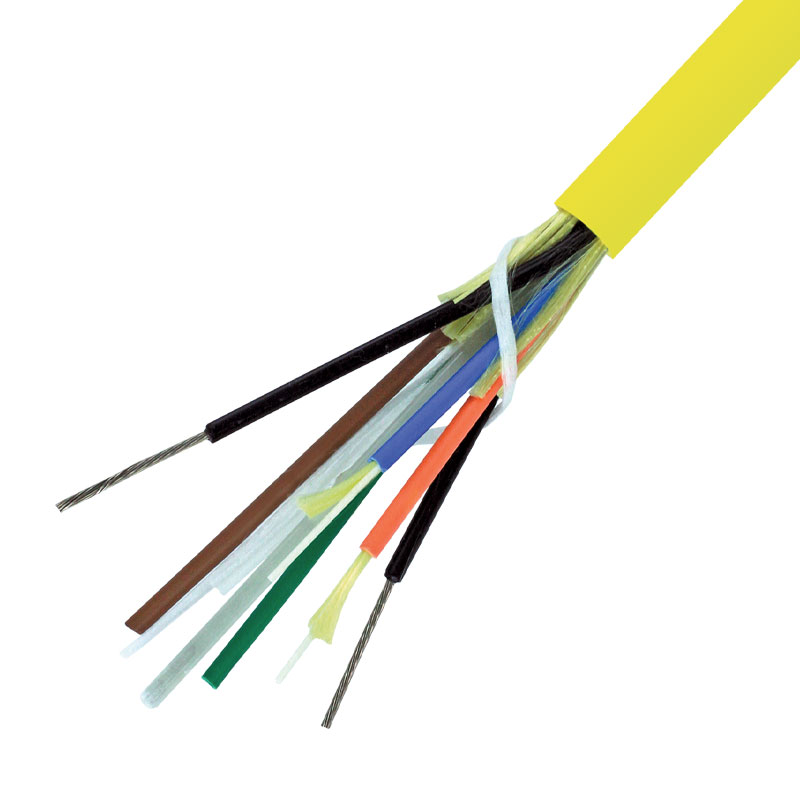
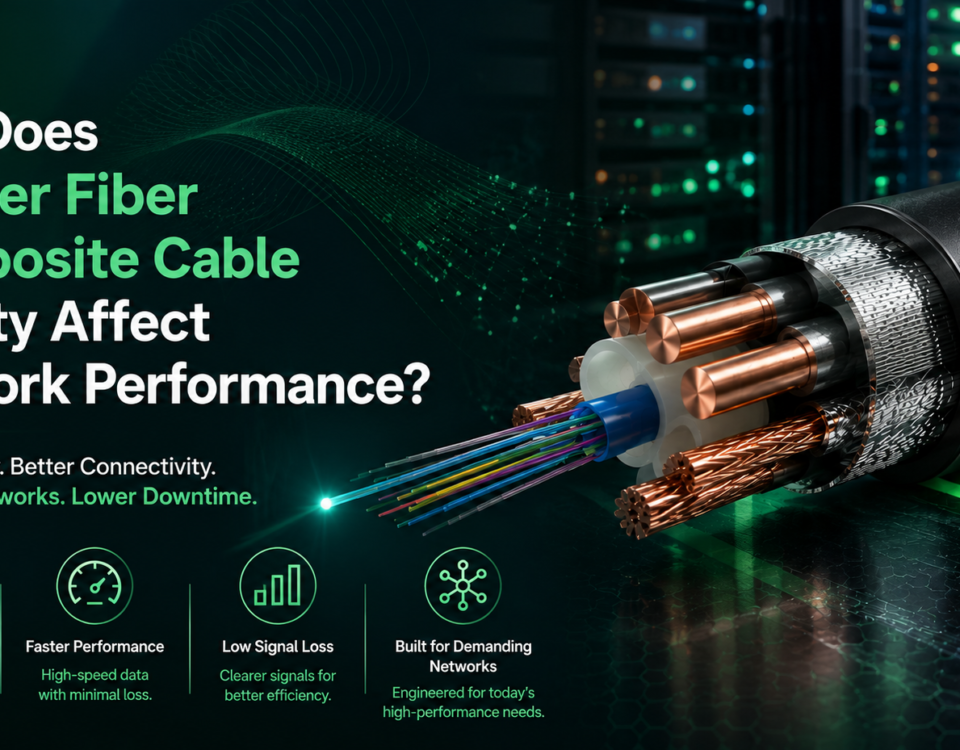
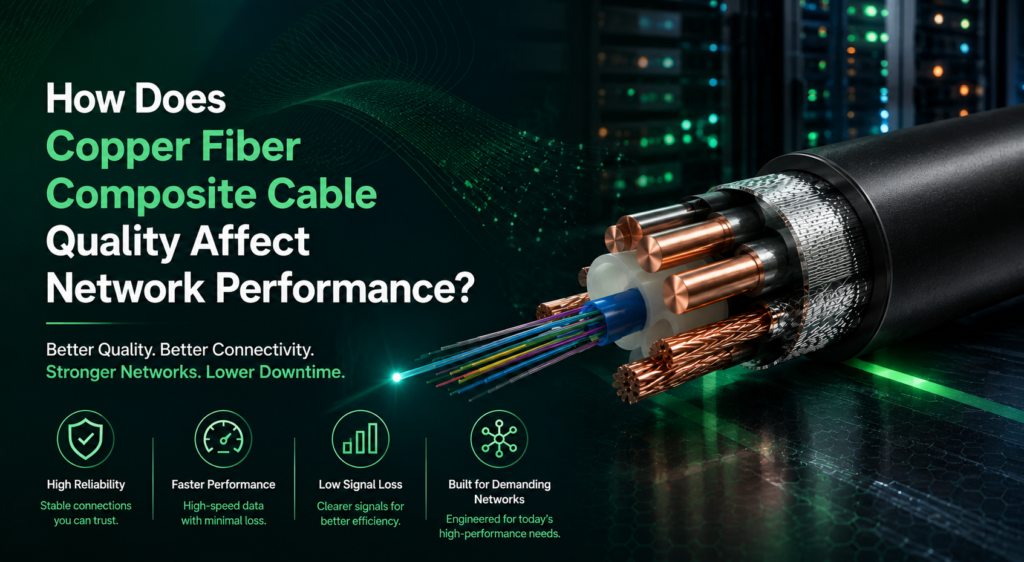
A copper fiber composite cable manufacturer produces cables that combine copper conductors for power transmission with optical fibers for high speed communication within a single cable construction.
This design can provide an efficient way to deliver low voltage power and communications through one installation. BaymroTech’s copper fiber composite cable uses flexible stranded copper conductors alongside fiber optic communication links, with individually protected copper and fiber channels. The product is designed for applications where space is limited and connected equipment may be difficult to access.
For buyers, the manufacturer’s value goes beyond producing the cable itself. The right manufacturer should be able to adapt construction, fiber configuration, copper conductor size, jacket materials, cable length, connectors, ratings, and other specifications to the actual project environment.
Applications and Industry Use Cases
Copper fiber composite cable can be useful where both electrical power and high speed communications need to reach remote or distributed equipment.
Common B2B applications include:
Telecom Infrastructure
Telecom networks often require reliable connectivity for remote equipment, wireless access infrastructure, and communication systems. Combining power and fiber into one cable can simplify installation where separate cable runs would consume additional space.
Security Networks
Security infrastructure can require both power and high bandwidth communications for connected devices. A composite cable can support installations where equipment needs dependable connectivity without creating unnecessary cabling complexity.
Wireless Access Points
Wireless access points may be installed in locations where equipment access is limited. A composite cable can provide a practical connection for both low voltage power and communications.
Harsh Environment LAN Installations
Certain industrial and infrastructure environments place additional demands on cable construction. Water blocking, rugged jackets, appropriate ratings, and mechanical protection can become important specification requirements.
IP Enabled Equipment
IP enabled appliances and remote network equipment can benefit from a combined power and communications connection, particularly when installation space is restricted.
BaymroTech lists applications including remote low voltage power, security networks, IP enabled appliances, wireless access points, and harsh environment LAN installations. Its available constructions include flexible stranded copper options, high speed fiber optics, water blocked designs, and specified cable classifications.
However, no two projects are necessarily identical. One deployment may require a particular copper conductor size, another may require a specific fiber configuration, while an outdoor project may demand different jacket and environmental characteristics. Certifications, testing requirements, connector configurations, cable lengths, and installation conditions can also vary.
That is why evaluating the manufacturer’s customization and engineering capabilities is critical before procurement approval.
What Should Buyers Evaluate in a Copper Fiber Composite Cable Manufacturer?
The most important supplier decision factors are not always visible in a product catalogue. Procurement teams should investigate the manufacturer’s ability to consistently deliver the required product at the required quality, quantity, and schedule.
1. OEM Manufacturing Capability
OEM capability is important when the project requires private labeling, customer-specific construction, custom packaging, or specifications that differ from standard catalogue products.
A capable OEM manufacturer should be able to review drawings, technical specifications, labeling requirements, packaging instructions, and project documentation before production.
BaymroTech provides OEM and ODM production services across its telecom product portfolio and states that it supports customized manufacturing for global customers.
For procurement teams, OEM capability can create a single point of responsibility instead of forcing the buyer to coordinate several separate vendors.
2. Customization Options
Customization is often the deciding factor for infrastructure projects.
Depending on project requirements, buyers may need to discuss:
- Copper conductor gauge
- Fiber type and fiber count
- Cable length
- Jacket material
- Indoor or outdoor construction
- Environmental protection
- Water blocking
- Connector configuration
- Labeling and packaging
- Customer branding
- Project-specific cable construction
BaymroTech indicates that its copper fiber composite cable range can be supplied in different configurations and lengths, with indoor and outdoor options, single mode and multimode fiber choices, different jacket materials, and connector types.
The key procurement question is not simply “Can you customize?” It is “Which specifications can you customize, and how will those changes affect testing, MOQ, lead time, and price?”
3. MOQ Requirements
Minimum order quantity can significantly affect project economics.
Standard products may have flexible ordering conditions, while special cable constructions may require a production minimum because of raw material procurement, tooling, setup, or production efficiency.
BaymroTech states that some customized cable orders may require a minimum bulk cable quantity, while standard products can have different MOQ arrangements.
Before issuing a purchase order, buyers should confirm:
- Minimum production quantity
- Minimum cable length
- Sample availability
- Pilot order conditions
- Whether unused bulk material can be retained for future orders
This helps prevent procurement surprises after technical approval.
4. Lead Time Stability
A supplier’s quoted lead time is only useful if the manufacturer can consistently meet it.
Project delays can affect installation crews, site readiness, commissioning schedules, inventory planning, and customer commitments.
Ask the manufacturer whether the quoted lead time applies to standard products, customized products, samples, and repeat production. Also confirm how capacity is allocated during high volume orders.
BaymroTech states that it maintains substantial telecom production capacity and offers fast turnaround for certain regular cable and connectivity orders.
For project procurement, the goal should be predictable delivery rather than simply the shortest initial quotation.
5. Product Certifications
Certification requirements depend on the application, installation environment, destination market, and project specification.
Buyers should identify required ratings before selecting the cable. BaymroTech’s listed copper fiber composite cable features include UL13, UL1666, NEC 725, CL2R-OF, and MSHA-related classifications for applicable constructions.
Procurement teams should request supporting documentation and verify that the certification applies to the exact cable construction being purchased.
6. Testing Reports
Testing documentation provides evidence that the supplied product meets defined performance requirements.
Depending on the cable and project, buyers may request documentation covering optical performance, physical construction, electrical characteristics, environmental performance, or other applicable tests.
A supplier that can provide traceable testing information gives engineering and procurement teams greater confidence during acceptance and deployment.
7. Quality Control Procedures
Quality control should cover incoming materials, production processes, assembly, inspection, testing, labeling, and final shipment.
BaymroTech states that its manufacturing operations use testing and inspection procedures and that products are tested before shipment.
Buyers should ask how quality is controlled at each production stage rather than relying only on a general quality statement.
8. Technical Support Capability
Custom cable projects often require technical discussions before production begins.
A useful manufacturer should be able to review specifications, clarify construction options, identify potential conflicts, and recommend practical configurations.
This is particularly important when the procurement team does not have a finalized cable design or when project requirements change during engineering.
9. Production Capacity
A manufacturer may be suitable for samples but unable to support a large deployment.
Procurement teams should evaluate factory capacity, production equipment, workforce capability, material availability, and the supplier’s ability to maintain quality when order volumes increase.
BaymroTech reports multiple manufacturing facilities and a broad ICT infrastructure product portfolio, supporting its ability to serve larger telecom and infrastructure programs.
10. Supply Chain Reliability and Project References
Reliable access to copper, fiber, jackets, connectors, and other components is essential for stable production.
Ask suppliers about material sourcing, inventory practices, production planning, and contingency arrangements.
Project references can also help buyers understand whether a manufacturer has successfully supported comparable telecom, data, security, or infrastructure deployments.
What Procurement Risks Should Buyers Avoid?
Several supplier selection mistakes can create problems long after the purchase order has been issued.
No OEM Capability
If the manufacturer cannot support custom engineering, buyers may need to compromise on specifications or coordinate multiple vendors.
No Test Reports
Without adequate testing documentation, it becomes harder to verify whether delivered cable matches the approved specification.
No Customization Support
A supplier focused only on standard products may struggle when cable construction, labeling, packaging, or environmental requirements change.
Unstable Lead Times
Unpredictable delivery can disrupt installation schedules and increase project management costs.
Limited Technical Support
When technical questions are left unanswered, small specification errors can become expensive field problems.
Inconsistent Quality Control
Variations between production batches can lead to installation failures, rework, premature replacement, and higher maintenance costs.
The lesson for procurement teams is straightforward: the lowest quoted price does not necessarily represent the lowest project cost. Supplier capability, documentation, consistency, and support should be included in the total procurement evaluation.
Copper Fiber Composite Cable Supplier Procurement Checklist
Use this checklist before approving a supplier:
| Procurement Factor | What Buyers Should Confirm |
| OEM capability | Can the supplier manufacture to project specifications? |
| MOQ | What are the minimum quantities for standard and customized products? |
| Lead time | Are production schedules predictable for repeat and bulk orders? |
| Certifications | Does the exact construction have the required ratings? |
| Testing reports | Can the supplier provide relevant inspection and test documentation? |
| Customization | Can copper, fiber, jacket, length, connectors, and labeling be adapted? |
| Technical support | Can engineering teams review drawings and specifications? |
| Quality control | Are materials, production, inspection, and final testing controlled? |
| Project references | Has the supplier supported comparable infrastructure projects? |
| Supply chain stability | Can materials and production capacity support the project lifecycle? |
Why Choose BaymroTech for Custom Copper Fiber Composite Cable Projects?
For B2B buyers, BaymroTech can be evaluated as more than a catalogue supplier. The company positions itself as a telecom equipment manufacturer with R&D, manufacturing, marketing, and engineering capabilities, along with OEM and ODM production services.
Its copper fiber composite cable offering is designed around the practical requirements of combined low voltage power and high speed communications. Available construction options include different copper conductor sizes, fiber configurations, cable types, jacket materials, and connector choices.
This engineering-focused approach can be particularly useful for system integrators and infrastructure contractors that need to translate project specifications into a manufacturable cable design.
BaymroTech also supports a broader telecom product portfolio, including fiber optic cable assemblies, passive components, fiber management products, cabinets and racks, and copper cable assemblies.
For procurement teams, that broader manufacturing capability can simplify supplier coordination when several connectivity components are required within the same infrastructure program.
What Should You Include in an RFQ?
A detailed RFQ helps the manufacturer provide a more accurate quotation and reduces specification misunderstandings.
Include:
- Required cable construction
- Copper conductor size
- Fiber type and fiber count
- Required cable length
- Indoor or outdoor installation
- Environmental conditions
- Required certifications or ratings
- Connector requirements
- Jacket requirements
- Quantity and MOQ expectations
- Packaging and labeling requirements
- Delivery destination
- Target delivery schedule
- Testing and documentation requirements
The more complete the RFQ, the easier it becomes to compare suppliers on technical compliance, commercial terms, and delivery capability rather than price alone.
Frequently Asked Questions
What is a copper fiber composite cable?
It is a cable that combines copper conductors for low voltage power with optical fibers for high speed communications in one cable construction.
Why is copper fiber composite cable used in telecom projects?
It can simplify installations where equipment requires both power and communications, particularly where space is limited or equipment is difficult to access.
Can copper fiber composite cable be customized?
Yes. Depending on the manufacturer, buyers may be able to customize conductor size, fiber configuration, cable length, jacket materials, connectors, labeling, and other construction details.
What certifications should buyers request?
The required certifications depend on the project and installation environment. Buyers should request documentation applicable to the exact cable construction being quoted, rather than relying on generic certification claims.
What is the typical lead time?
Lead time depends on cable construction, customization, order volume, material availability, and production scheduling. Buyers should request a project-specific production and delivery schedule.
How can buyers verify supplier quality?
Request product specifications, test reports, certification documentation, quality procedures, samples, and relevant project references. For large projects, a sample or pilot production run can provide additional confidence.
What MOQ should buyers expect?
MOQ varies by product and customization level. Customized cable constructions may require higher minimum quantities because of production setup and material requirements.
Why is OEM capability important?
OEM capability allows a manufacturer to produce according to customer-specific technical, branding, packaging, and project requirements instead of limiting procurement to standard catalogue products.
Request a Project-Specific RFQ From BaymroTech
If your project requires copper fiber composite cable, do not evaluate suppliers on unit price alone. Compare their OEM capability, customization options, MOQ, lead time stability, certifications, testing procedures, quality controls, production capacity, technical support, and supply chain reliability.
BaymroTech works with B2B customers on telecom and ICT infrastructure requirements and provides OEM and ODM manufacturing support.
For a project-specific quotation, share your cable specifications, estimated quantity, application environment, required certifications, customization requirements, and delivery expectations so the engineering and sourcing teams can evaluate the appropriate solution.
Ready to source a copper fiber composite cable built around your exact project requirements? Contact BaymroTech to discuss your OEM specifications, customization needs, MOQ, lead time, and RFQ today.