
Introduction
As data centers continue to scale their infrastructure to support cloud computing, AI workloads, edge computing, and high-bandwidth applications, network reliability has become more critical than ever. Even small issues in fiber management can create significant operational challenges, resulting in downtime, maintenance complexity, and increased operational costs.
One component that often receives less attention during procurement is the fiber optic patch panel. While it may appear to be a simple connectivity product, the quality, design, and manufacturing consistency of a patch panel can directly affect network organization, scalability, maintenance efficiency, and long-term performance.
Choosing the wrong supplier can lead to inconsistent product quality, delayed project schedules, unstable lead times, poor technical support, and higher total cost of ownership. For procurement teams, engineering contractors, telecom operators, and data center developers, supplier selection should be viewed as a strategic sourcing decision rather than a simple price comparison exercise.
This guide explains what data center buyers should evaluate when selecting a fiber optic patch panel supplier and how the right manufacturing partner can support long-term project success.
What Is a Fiber Optic Patch Panel?
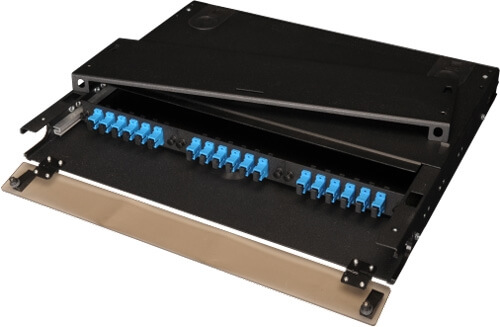
A fiber optic patch panel is a cable management and termination system designed to organize, protect, and distribute fiber optic connections within a network infrastructure.
It serves as a central point where fiber cables can be terminated, connected, labeled, and managed efficiently. Patch panels help simplify maintenance, improve network organization, reduce cable congestion, and support future scalability.
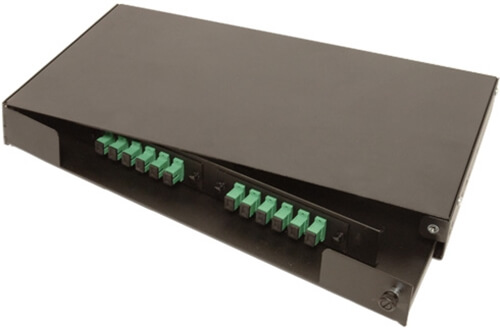
Fiber optic patch panels are commonly available in rack-mounted, wall-mounted, sliding drawer, and high-density configurations to meet different deployment requirements.
For data centers, telecom facilities, enterprise networks, and broadband infrastructure projects, patch panels play an essential role in maintaining reliable fiber connectivity and efficient network management.
Applications and Industry Use Cases
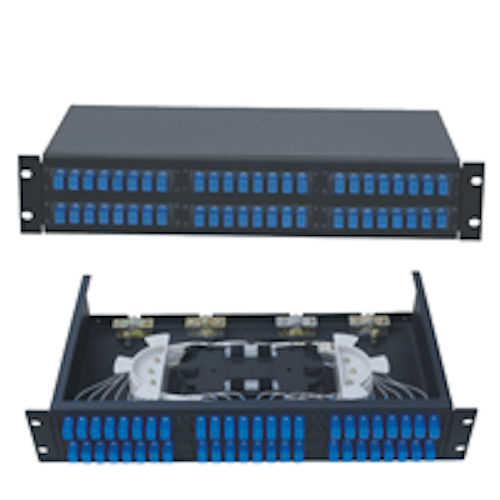
Fiber optic patch panels are widely used across multiple industries where reliable fiber connectivity and cable organization are essential.
Data Centers
Modern data centers rely on fiber optic patch panels to manage high-density fiber connections while ensuring accessibility for maintenance and upgrades.
Telecommunications Networks
Telecom operators use patch panels in central offices, transmission stations, and backbone network deployments to organize large volumes of fiber connections.
FTTH Infrastructure
Fiber-to-the-home projects require structured fiber distribution systems that support efficient installation and future network expansion.
Enterprise Networks
Large enterprises utilize patch panels to maintain organized fiber infrastructure within campuses, office buildings, and server rooms.
Industrial and Smart Infrastructure Projects
Transportation systems, smart city networks, utility monitoring systems, and industrial facilities frequently deploy fiber optic patch panels to manage mission-critical communication networks.
Edge Computing Facilities
As edge computing grows, compact and high-density patch panel solutions help operators maximize space utilization while maintaining network reliability.
Different projects often require different port densities, enclosure designs, environmental protection levels, certifications, and customization options. Because of these varying requirements, evaluating supplier capabilities becomes just as important as evaluating the product itself.
What Should Buyers Evaluate When Choosing a Fiber Optic Patch Panel Supplier?
This is the most important part of the procurement process. A reliable supplier should provide far more than a competitive quotation.
1. OEM Manufacturing Capability
Many suppliers operate solely as trading companies. While distributors can provide products, they often have limited control over production quality, customization, and delivery schedules.
An OEM manufacturer offers:
- Better production control
- More flexible customization
- Faster technical communication
- Improved quality consistency
- Greater supply chain visibility
For large-scale infrastructure projects, OEM capability can significantly reduce procurement risk.
2. Customization Options
Not every project requires a standard configuration.
Buyers may need:
- Different port capacities
- Custom adapter configurations
- Unique cable entry designs
- Specialized labeling systems
- Project-specific branding
- Customized rack dimensions
A supplier that supports engineering customization can help optimize installation efficiency and network performance.
3. MOQ Requirements
Minimum Order Quantity requirements can impact project budgeting and inventory management.
Procurement teams should clarify:
- Standard MOQ levels
- Customized product MOQ
- Sample order availability
- Trial order flexibility
Suppliers with flexible MOQ policies often provide greater support for pilot projects and phased deployments.
4. Lead Time Stability
A competitive price means little if products arrive late.
Data center projects frequently operate on strict schedules. Delayed component deliveries can create installation bottlenecks and increase project costs.
Buyers should request information regarding:
- Standard production lead times
- Capacity during peak demand periods
- Emergency order capability
- Historical on-time delivery performance
5. Product Certifications
Certifications help verify compliance with recognized quality and safety standards.
Depending on project requirements, buyers may request:
- ISO quality certifications
- RoHS compliance
- CE compliance
- Telecommunications industry standards
- Third-party verification reports
Certified products often simplify project approvals and reduce compliance concerns.
6. Testing Reports
A trustworthy supplier should provide documented testing data.
Important testing documentation may include:
- Insertion loss testing
- Return loss testing
- Mechanical durability testing
- Environmental testing
- Material verification reports
Testing reports provide objective evidence of product performance.
7. Quality Control Procedures
Quality consistency becomes increasingly important as project volume grows.
Buyers should evaluate:
- Incoming material inspection
- In-process quality checks
- Final product inspection
- Traceability systems
- Defect management procedures
Robust quality control helps minimize field failures and warranty claims.
8. Technical Support Capability
Technical support is often overlooked during supplier evaluation.
However, engineering assistance can be valuable when addressing:
- Product selection
- Installation planning
- Compatibility verification
- Customization requests
- Troubleshooting support
Responsive technical teams help reduce deployment risks.
9. Production Capacity
Large infrastructure projects require confidence in manufacturing scalability.
Questions buyers should ask include:
- Monthly production capacity
- Available production lines
- Capacity expansion capability
- Support for multi-site projects
A supplier with sufficient production capacity can support future growth without disrupting supply continuity.
10. Supply Chain Reliability
Global supply chain disruptions continue to impact infrastructure projects.
Procurement teams should assess:
- Raw material sourcing stability
- Inventory management systems
- Supplier diversification strategies
- Business continuity planning
Reliable supply chains help ensure uninterrupted project execution.
11. Project References
Past project experience often reveals a supplier’s real-world capabilities.
Buyers should request examples involving:
- Data centers
- Telecom operators
- System integrators
- Infrastructure contractors
- Enterprise network deployments
Successful project references provide additional confidence during supplier qualification.
Procurement Risks and Common Supplier Selection Mistakes
Many sourcing challenges arise because buyers focus primarily on pricing rather than supplier capability.
No OEM Capability
Without direct manufacturing control, product consistency and customization flexibility may be limited.
No Testing Reports
Products without documented testing create uncertainty regarding long-term performance and compliance.
No Customization Support
Standard products may not meet project-specific installation requirements, resulting in additional engineering costs.
Unstable Lead Times
Delivery delays can affect installation schedules and contract commitments.
Limited Technical Support
Insufficient technical assistance can increase deployment risks and prolong troubleshooting efforts.
Inconsistent Quality Control
Variations in materials and production processes may lead to product failures, warranty issues, and increased maintenance costs.
For procurement teams, these risks can directly impact project profitability, client satisfaction, and operational reliability.
Fiber Optic Patch Panel Supplier Evaluation Checklist
| Evaluation Criteria | Verify Before Ordering |
| OEM Manufacturing Capability | ✓ |
| MOQ Requirements | ✓ |
| Stable Lead Times | ✓ |
| Product Certifications | ✓ |
| Testing Reports Available | ✓ |
| Customization Options | ✓ |
| Technical Support Team | ✓ |
| Quality Control Procedures | ✓ |
| Relevant Project References | ✓ |
| Supply Chain Stability | ✓ |
Using a structured evaluation checklist helps procurement teams make objective sourcing decisions and reduce supplier-related risks.
Why BaymroTech?
For organizations seeking a dependable fiber optic patch panel supplier, BaymroTech combines manufacturing expertise with a strong focus on B2B project requirements.
As an OEM manufacturer and engineering-focused supplier, BaymroTech supports telecom operators, system integrators, contractors, infrastructure developers, and enterprise customers with solutions designed for demanding network environments.
BaymroTech offers:
- OEM and private label manufacturing
- Product customization support
- Flexible project requirements
- Comprehensive quality control processes
- Technical consultation assistance
- Stable production capability
- Reliable supply chain management
- Support for global B2B procurement projects
Rather than simply supplying products, BaymroTech works as a long-term sourcing partner that helps customers align technical requirements, project timelines, and procurement objectives.
As infrastructure projects become larger and more complex, selecting a supplier with proven manufacturing capabilities, quality assurance systems, and engineering support becomes increasingly important.
Frequently Asked Questions
What is a fiber optic patch panel?
A fiber optic patch panel is a cable management system used to organize, terminate, and distribute fiber optic connections within a network.
Why are fiber optic patch panels important in data centers?
They improve cable organization, simplify maintenance, support scalability, and help maintain reliable network performance.
Can fiber optic patch panels be customized?
Yes. Many OEM manufacturers offer customized port configurations, adapter types, enclosure designs, labeling options, and branding.
What certifications should buyers request?
Common certifications include ISO, RoHS, CE, and other project-specific compliance requirements.
What is the typical lead time for fiber optic patch panels?
Lead times vary depending on order volume, customization requirements, and manufacturing capacity. Buyers should confirm lead times before procurement.
How can buyers verify supplier quality?
Buyers should review testing reports, quality control procedures, certifications, project references, and manufacturing capabilities.
Why is OEM capability important?
OEM manufacturers typically provide better customization, production control, quality consistency, and technical support.
What documents should suppliers provide?
Suppliers should provide certifications, testing reports, technical specifications, quality documentation, and project references whenever applicable.
How do I choose between a sliding and fixed fiber optic patch panel?
The choice depends on the installation environment, maintenance frequency, and rack space. Sliding patch panels provide easier front access for maintenance and are often preferred in high-density data centers, while fixed patch panels are suitable for simpler network deployments.
Should I choose an unloaded or fully loaded fiber optic patch panel?
Unloaded patch panels offer greater flexibility because buyers can select adapters and pigtails based on project requirements. Fully loaded patch panels reduce installation time and are ideal for projects requiring faster deployment.
Discuss Your Project Requirements with BaymroTech
Whether you are planning a new data center deployment, telecom infrastructure expansion, FTTH project, or enterprise network upgrade, selecting the right fiber optic patch panel supplier is essential for long-term project success.
Before placing an order, discuss:
- OEM manufacturing requirements
- Customization needs
- MOQ expectations
- Lead time requirements
- Certification requirements
- Technical specifications
- Project-specific deployment challenges
BaymroTech’s engineering and sourcing team can help evaluate the most suitable solution for your application while supporting procurement efficiency and project reliability.
Conclusion
Fiber optic patch panels may represent a small portion of overall infrastructure spending, but they play a critical role in network organization, scalability, and operational reliability. For procurement teams, supplier selection should focus on manufacturing capability, quality assurance, customization support, technical expertise, and supply chain stability rather than price alone.
By applying a structured supplier evaluation process, buyers can reduce procurement risks, improve project outcomes, and achieve better long-term value.
