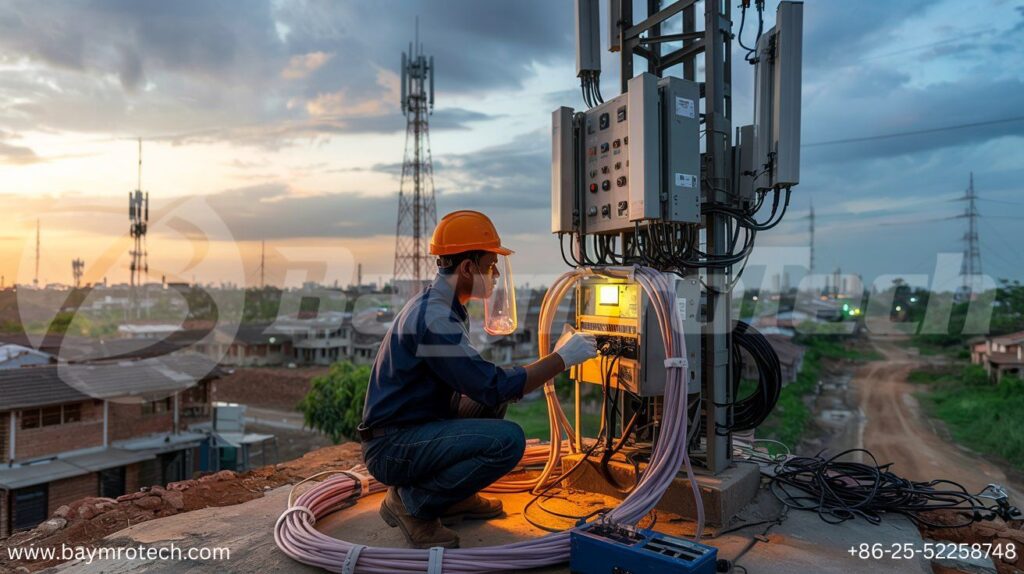

Imagine installing a new link at 2 a.m. in a remote exchange only to find intermittent failures the next morning. Frustrating, costly, and avoidable. The biggest pain for telecom teams isn’t designing faster networks—it’s ensuring the equipment and cables you buy perform exactly the same in the field as they did in the lab. This post explains how manufacturers and operators can close that gap, reduce field failures, and deliver predictable performance from factory to field.
Why field consistency matters (and what’s at stake)
- Downtime costs: A single site outage can cost thousands in lost service revenue and SLA penalties.
- Reputation risk: Repeated failures damage customer trust and lead to churn.
- Operational burden: Troubleshooting remote assets ties up engineers and delays new rollouts.
- Start with design-for-manufacturability and testing
Good products begin before the first prototype.
So how do we move from “it passed QA” to “it works reliably in the field”? Below are practical steps, real-world checks, and processes you can adopt or demand from suppliers.
- Design for harsh environments: Ensure components tolerate temperature swings, humidity, vibration, and electromagnetic interference common in telecom sites.
- Build testability into the design: Add test points, modular connectors, and self-diagnostic features so field teams can quickly identify faults.
- Use accelerated life testing (ALT): Simulate years of environmental stress in weeks to uncover early-life failures.
Example: A manufacturer who redesigned connector strain relief to match field pulling techniques cut early connector failures by 60% after adding a pull-test spec that mimicked real installation forces.
- Tighten supplier controls and incoming inspection
A finished device is only as good as its parts.
- Supplier qualification: Select vendors with documented quality systems (ISO 9001/ISO 13485 if applicable) and evidence of process control.
- Lot traceability: Track batches of parts to their source so you can quarantine and recall quickly if problems appear.
- Incoming inspection: Implement sampling inspections and test critical characteristics on each batch, not just visual checks.
- Standardize manufacturing processes and operator training
Consistency on the line reduces variability.
- Work instructions and checklists: Use clear standard operating procedures (SOPs) for assembly, soldering, and calibration.
- Process monitoring: Monitor torque, solder temperatures, and assembly times using SPC (statistical process control).
- Operator certification: Train assemblers and technicians regularly and require recertification for critical tasks.
- Real-world validation: test like the field installs
Lab tests are necessary, but they must reflect reality.
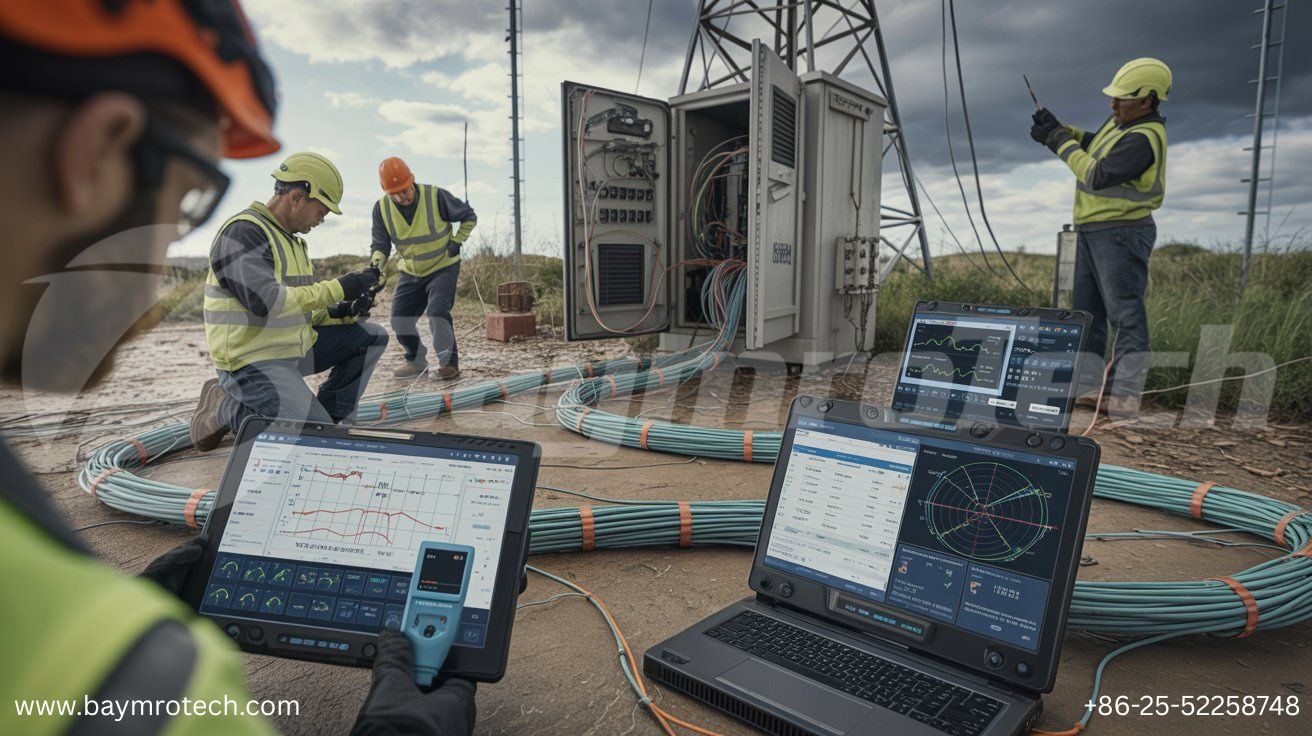
- Field-simulated testing: Replicate installation stresses—pulling, bending, temperature cycles, and connector mating/unmating—rather than only bench measurements.
- Pilot deployments: Deploy a controlled number of units to representative sites for an extended period before mass rollout.
- On-site acceptance criteria: Agree with customers on acceptance tests performed post-installation to ensure what passed in the factory still meets expectations.
- Monitor performance post-deployment
Quality isn’t finished at shipment.
- Remote diagnostics and telemetry: Equip devices with reporting that flags degradation trends (e.g., rising error rates, temperature drift).
- Proactive maintenance: Use telemetry to trigger maintenance before failures occur, turning break-fix into predictive care.
- Feedback loops: Log field failures, root-cause analyses, and corrective actions. Feed findings back to design and manufacturing teams.
- Focus on cable and connector reliability
Cables and connectors are frequent failure points—especially in long-haul and outdoor runs.
- Choose the right cable for conditions: For hybrid runs, consider options like copper fiber composite cable when you need combined power and data over a single jacket. (Primary keyword used here.)
- Proper installation practices: Enforce minimum bend radii, correct tension during pulling, and environmental sealing at terminations.
- Field testing of runs: Use OTDRs and continuity tests after installation and again after environmental stress events.
- Implement strict change management
Small changes cause big surprises.
- Controlled engineering change process: Any design or component change requires risk assessment, regression testing, and documented approval.
- Communicate changes to field teams: Provide updated installation guides, spare part lists, and training so installers aren’t blindsided by slight differences.
Practical checklist for reducing field failures
- Require supplier quality evidence (certifications and factory audit reports).
- Enforce incoming inspection with lot traceability.
- Run ALT and field-simulated environmental tests.
- Use SPC on critical process parameters.
- Pilot deploy and monitor for at least one full seasonal cycle.
- Equip products with telemetry for remote health monitoring.
- Maintain a documented change management and feedback loop.
Real statistic to keep you honest
Industry studies show that a significant portion of early-life telecom failures come from installation and handling rather than core design—some estimates place this as high as 40% of field incidents. That means better testing and training around installation can reduce a large share of outages. For deeper reading on reliability testing and field validation methods, see IEEE’s resources on telecom equipment qualification and testing procedures.
Authoritative resources and further reading
- For design and environmental testing guidance, review IEEE standards on telecom equipment qualification.
- For industry reliability practices and case studies, the Telecom Industry Association (TIA) publishes helpful guides.
- For best practices on cable testing and installation, reference manufacturer guides and the BICSI standards.
Internal resources on baymrotech.com
- Learn about our product testing approaches and quality standards on our Quality Assurance page: https://baymrotech.com/quality-assurance (internal link).
- See installation best practices and training offerings in our Services section: https://baymrotech.com/services/installations (internal link).
External credibility links
- IEEE Standards for environmental testing (authoritative guidance): https://standards.ieee.org/
- Telecom Industry Association (TIA) reliability recommendations: https://www.tiaonline.org/
Bringing it together: your action plan this quarter
- Audit your top suppliers and demand lot traceability.
- Run a pilot deployment for any new product family and monitor for at least three months.
- Update installation training and provide installers with clear pull/tension and bend-radius specs.
- Add telemetry to new devices and set thresholds for proactive alerts.
Conclusion and next steps
Consistent field performance comes from integrating design foresight, tight supplier control, realistic testing, and ongoing monitoring. Start small—pick one product family or supplier—and apply the checklist above. You’ll see fewer emergency dispatches, lower warranty costs, and happier customers.
Want help applying these steps to your specific products or planning a pilot deployment? Contact our team at baymrotech.com/electric/contact or share your biggest field-quality headache in the comments below—let’s solve it together.