Did you know your business’s network could be bottlenecking growth without you even realizing it? In today’s data-hungry world, slow connections mean lost opportunities, frustrated teams, and skyrocketing costs from outdated setups. This guide breaks down everything you need to know about fiber, copper, and data center solutions to future-proof your ICT infrastructure and keep you ahead of the curve.
Why ICT Infrastructure Matters Now
You’re probably juggling more data than ever—think AI workloads, remote teams, and 5G demands. Poor infrastructure leads to downtime that costs enterprises an average of $5,600 per minute, according to industry reports. Choosing the right cables and setups isn’t just technical; it’s your ticket to seamless scalability and efficiency.
The global fiber optics market hit USD 6.6 billion in 2024 and is barreling toward $14.7 billion by 2033 at a 9.2% CAGR, fueled by data centers and telecom needs. Meanwhile, copper still holds strong for shorter runs. We’ll dive into how these fit your world.
Copper Cabling: Reliable and Cost-Effective Basics
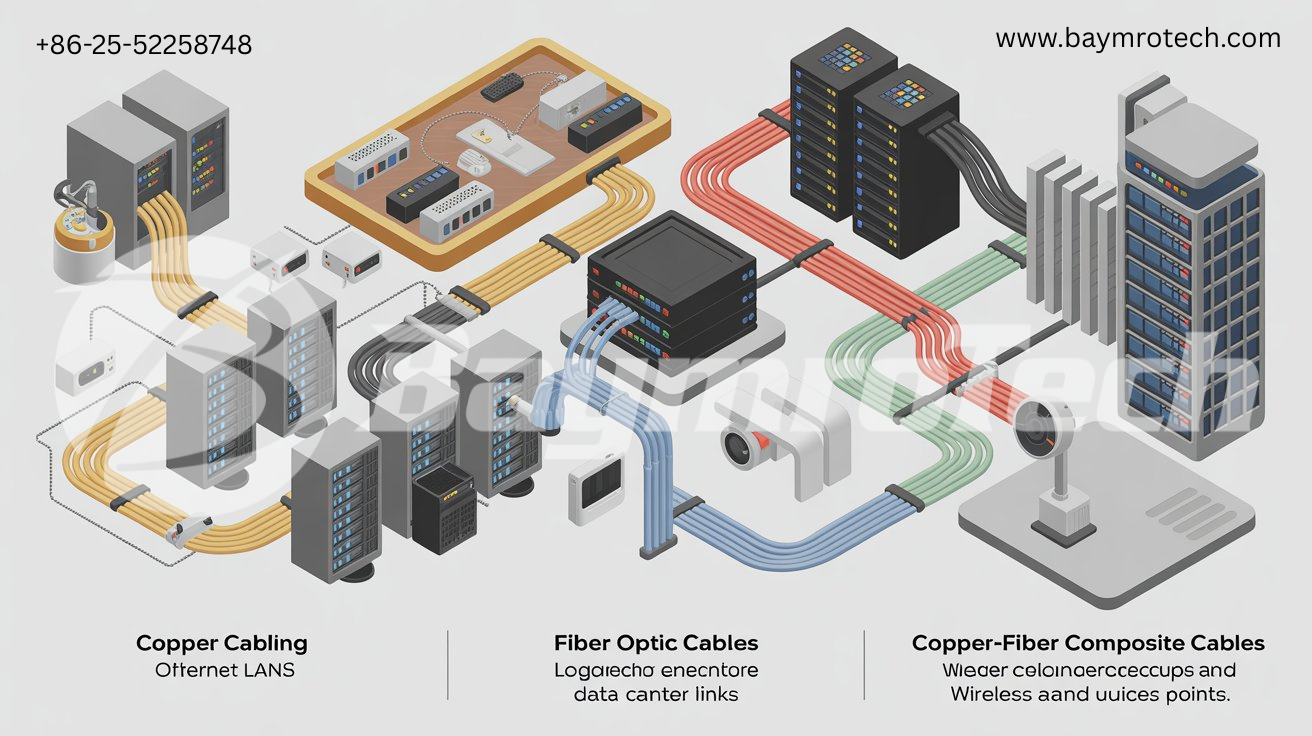
Copper cables have been the workhorse of networks for decades, carrying electrical signals via twisted pairs like Cat6 or Cat6A. They’re affordable, easy to install, and perfect for short-distance needs up to 100 meters.
- Pros: Low upfront costs (copper dominates 65% of India’s wire market), solid for 10 Gbps speeds, and backward-compatible with legacy gear.
- Cons: Prone to electromagnetic interference (EMI), signal loss over distance (90% attenuation every 100m), and maxing out at 10 Gbps short-range.
I remember helping a small office upgrade from old Cat5—speeds doubled overnight, but we hit limits fast as video calls exploded. Copper shines in offices or LANs, but don’t push it too far.
Check out Baymro Technology’s network cabinets for housing your copper setups—they’re rugged for telecom demands.
Fiber Optic Cables: Speed of Light Unleashed
Fiber optics use light pulses through glass strands for insane bandwidth—up to 100 Gbps today, with 800 Gbps in labs and 1.6 Tbps on the horizon. Forget copper’s limitations; fiber handles 60 terabits per second with just 3% loss per 100m.
Types include single-mode (long-haul, thin core) and multi-mode (shorter, wider core like OM5 for data centers).
- Key advantages: Immune to EMI, thinner/lighter, and future-proof for AI-driven data surges.
- Real-world win: Data centers switching to fiber cut latency by 50%, boosting throughput where copper chokes at 25-300 Mbps.
Humor me: If copper is a trusty bicycle, fiber’s a supersonic jet. Baymro excels here as a top fiber optic cable supplier—their supplies handle harsh environments effortlessly.[web:page:1 from fetch]
For deeper specs, see FOA’s fiber cable guide.
Copper/Fiber Composite Cable: The Hybrid Hero
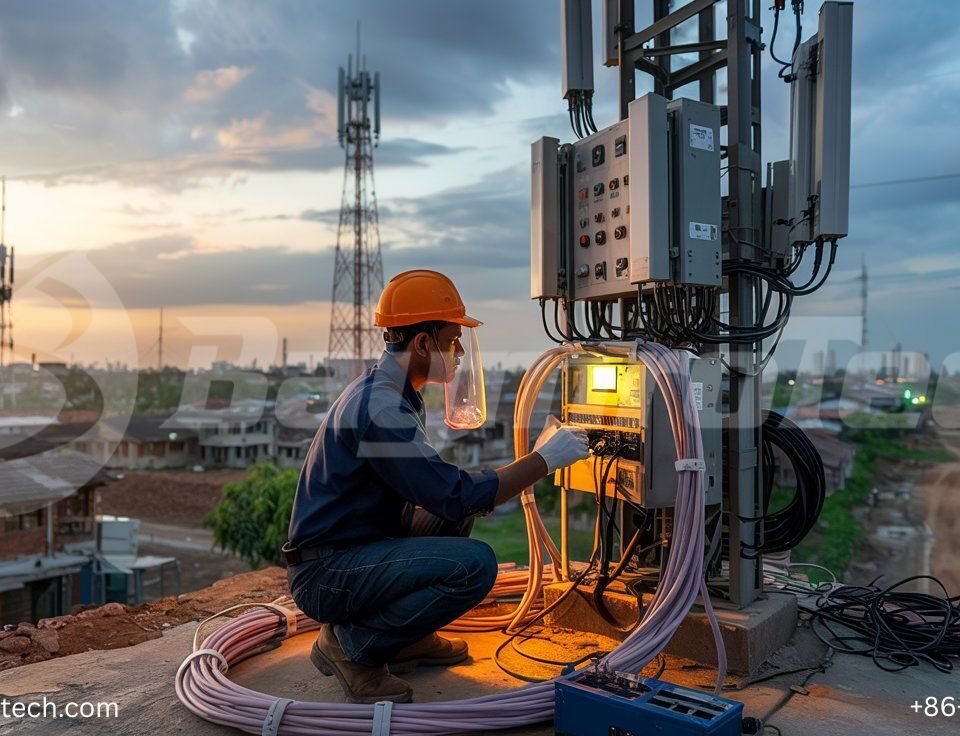
Enter the Copper/Fiber Composite Cable—a smart mashup sending data via fiber and power via copper in one sheath. It’s a game-changer for ICT, slashing installation time by needing just one pull instead of two cables.
These hybrids (per NEC and IECA standards) suit PoE devices like cameras, sensors, and wireless APs, reaching 1500 feet without extra IDF closets. Benefits include cost savings on labor/inventory and new possibilities like powering remote edge computing.
- Applications: 5G small cells, industrial automation, building controls—think streamlined factories or smart buildings.
- Why it rocks: High bandwidth plus remote power, with jackets like LSZH for tunnels or CPE for outdoors.
Picture this: A client avoided a messy retrofit by swapping to composite—power and gigabit data in one run. Pure efficiency! Learn more from Belden’s hybrid benefits.
Data Center Solutions: Where It All Converges
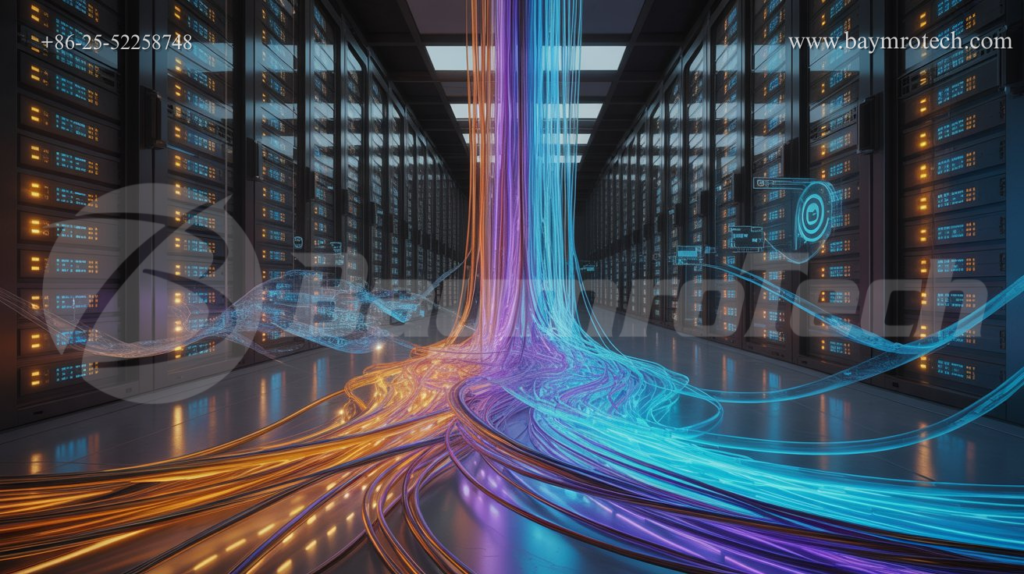
Data centers are ICT’s beating heart, demanding hybrid strategies amid 2026 trends like 1.6T Ethernet and AI power hogs. Best practices? Structured cabling with SMF backbones, OM5 intra-rack, and Cat8 shorts.
- Cable management tips: Color-code, label ends, keep trays <40% full for airflow, audit regularly—cuts troubleshooting by 50%.
- Trends: VSFF connectors for density, hybrids for IoT edges, sustainability via efficient designs.
Gigawatt-scale campuses now plan 200,000 fiber strands upfront. For racks and enclosures boosting your center, explore Baymro’s electric solutions at baymrotech.com/electric.[web:page:2 from fetch]
Siemon’s 2026 data center trends nails the shift to modular fiber.
Choosing Your Setup: Practical Advice
Assess your needs: Distance over 100m? Go fiber. Power+data? Composite. Budget-tight shorts? Copper.
Start with bandwidth forecasts—AI could 10x demands. Mix them: Copper for access, fiber core, hybrids edges. Test for EMI in factories. Pro tip: Partner with experts like Baymro for custom fiber supplies.
Ever felt installation overwhelm? We have—plan structured, comply with TIA/ISO, and scale modularly.
Key Takeaways and Next Steps
You’ve got the rundown: Copper for basics, fiber for speed, composites for smarts, and data centers thriving on hybrids. This combo tackles pain points like latency and costs head-on.
Ready to upgrade? Head to baymrotech.com for premium fiber and electric gear, or email jacky.cheung@baymrotech.com for a chat. What’s your biggest network headache? Share in comments—we’d love to help!