
Ever wondered why your internet feels lightning-fast one day and sluggish the next—even with “fiber” in your plan? Or maybe you’ve heard your neighbor rave about their new smart home setup, but your own devices seem to lag behind. Here’s the secret: the backbone of your digital life isn’t just the fiber running down your street, but the hidden hero known as the Optical Distribution Network (ODN). If you’re planning, managing, or just curious about FTTx deployments, understanding ODN architecture could be your game-changer.
Why ODN Matters: The Heart of FTTx
Let’s face it—most of us just want our Netflix to stream in 4K and our video calls to be crystal clear. But behind every seamless connection is a complex network, and the ODN is its beating heart. In fact, the ODN can account for up to 70% of the total cost in a Fiber to the Home (FTTH) deployment. That’s a huge chunk of your investment! And yet, many network headaches—slow speeds, maintenance nightmares, and scaling issues—can be traced back to poor ODN planning or outdated architecture.
But don’t worry. Once you grasp the basics of ODN in modern FTTx, you’ll be equipped to make smarter decisions, avoid common pitfalls, and maybe even impress your tech-savvy friends.
What Is ODN in FTTx, Really?
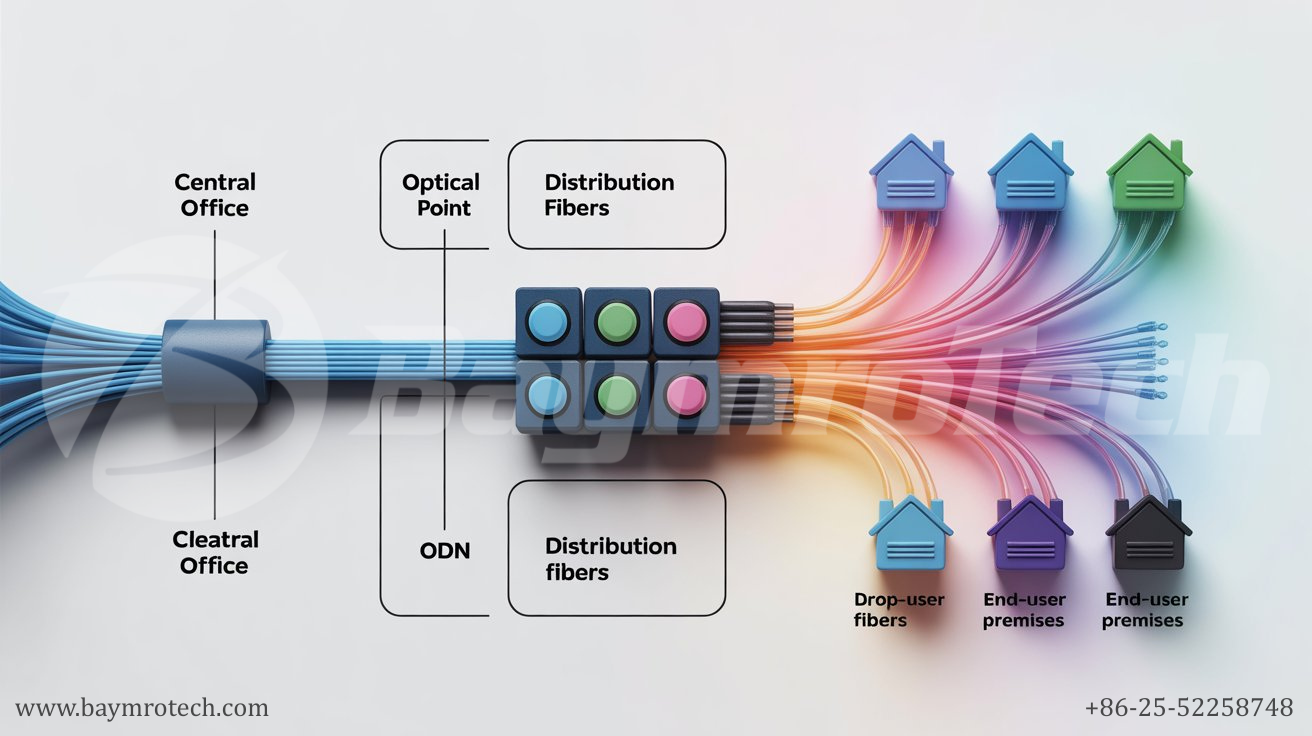
ODN stands for Optical Distribution Network. In simple terms, it’s the network segment that connects the central office (where the internet “enters” your neighborhood) to your home, business, or building. Think of it as the highway system for your data, with on-ramps, exits, and rest stops along the way.
Key Components of ODN
- Feeder Fiber: The main artery, running from the central office to the distribution point.
- Optical Distribution Point: Where the feeder fiber branches out, often using splitters to serve multiple destinations.
- Distribution Fiber: These are the “side streets,” connecting the distribution point to access points closer to end-users.
- Drop Fiber: The final stretch, delivering fiber directly to your premises.
- Passive Optical Splitters: Devices that split a single fiber into multiple outputs, enabling one connection to serve dozens of homes or offices.
- Fiber Optic Adapter: The unsung connector, ensuring smooth transitions between different fiber types or equipment.
Each of these components must work in harmony for your FTTx deployment to deliver on its promise of blazing-fast, reliable connectivity.
ODN Architecture: Centralized vs. Distributed
Not all ODNs are created equal. The architecture you choose can make or break your network’s performance and scalability.
Centralized Splitting
- Uses a single, large splitter (like 1×32 or 1×64) at a central location.
- Easier to manage and maintain.
- Best for areas with high user density.
Distributed Splitting
- Utilizes multiple smaller splitters (like 1×4 or 1×8) spread throughout the network.
- Offers flexibility for expanding or adapting the network.
- Ideal for rural or sprawling developments.
Pro Tip: The right architecture depends on your deployment area, user density, and future growth plans. For a deeper dive, check out this authoritative breakdown of FTTx architectures.
Challenges in ODN Design (And How to Beat Them)
Let’s be honest—ODN planning isn’t for the faint of heart. Here are some common hurdles:
- High Initial Costs: ODN construction can eat up most of your budget. Efficient planning and the right components (like pre-connectorized Fiber Optic Adapters) can help reduce labor and material costs.
- Complex Maintenance: Traditional ODNs rely heavily on manual paperwork and skilled labor, increasing the risk of errors and downtime.
- Scalability Issues: Poorly designed ODNs make it tough to add new users or upgrade speeds without major overhauls.
Modern Solutions
- Digital and Intelligent ODNs: New technologies use AI and digital twins for real-time network visualization, resource management, and predictive maintenance.
- Pre-connectorized Solutions: These allow for plug-and-play installation, reducing errors and speeding up deployment.
- Smart Fiber Optic Adapters: Modern adapters can handle multiple fiber types and interfaces, making network upgrades a breeze.
Want to know more about how these solutions work in real-world scenarios? Visit our ODN solutions page for detailed guides and case studies.
The Role of Fiber Optic Adapter in ODN
You might think of a Fiber Optic Adapter as just a tiny connector, but it’s actually a linchpin in your network. These adapters align and connect different types of fiber cables and equipment, ensuring minimal signal loss and maximum compatibility. In modern ODNs, using the right adapter can mean the difference between seamless streaming and endless buffering.
And here’s a fun fact: Some adapters even allow you to branch off signals to multiple destinations, making them essential for both residential and business applications. For a closer look at our range, check out our Fiber Optic Adapter product showcase.
Trends Shaping ODN and FTTx Deployments
The world of FTTx is evolving at warp speed. Here’s what’s hot in 2025 and beyond:
- AI-Driven Network Design: Automation is reducing human error and optimizing resource allocation.
- Digital Twins: Virtual models mirror your physical network, allowing for real-time monitoring and predictive maintenance.
- Software-Defined Networks (SDN): Operators can now program and adjust networks on the fly, improving flexibility and uptime.
- Green Networks: Energy-efficient components and smarter layouts are reducing the carbon footprint of FTTx deployments.
- Enhanced Security: Fiber networks are naturally more secure, but modern ODNs add layers of protection for sensitive data.
Curious about how these trends impact your business or community? This industry analysis on FTTx growth offers some eye-opening insights.
Practical Tips for Successful ODN Deployment
- Plan for the Future: Don’t just meet today’s needs—anticipate tomorrow’s bandwidth and user growth.
- Choose Quality Components: Invest in reliable splitters, adapters, and cables to minimize maintenance headaches.
- Embrace Digital Tools: Use AI-powered design and management platforms to streamline planning and troubleshooting.
- Train Your Team: Skilled technicians are your best asset for smooth installations and rapid repairs.
If you’re feeling overwhelmed, remember: you don’t have to go it alone. Our team at Baymrotech specializes in custom ODN solutions and can guide you every step of the way.
Conclusion: Your Next Steps in ODN Excellence
ODN architecture is the backbone of modern FTTx deployments—get it right, and everything else falls into place. From choosing the right splitter strategy to leveraging smart Fiber Optic Adapters, every detail matters. Embrace new technologies, plan with precision, and don’t be afraid to ask for expert help.
Ready to take your network to the next level? Explore our comprehensive ODN solutions or dive into our Fiber Optic Adapter product showcase. Have questions or want to share your own ODN story? Drop us a line—we’d love to hear from you!
For more insights and updates, check out this guide to future-ready FTTx networks and stay ahead of the curve.