
Have you ever spent hours installing a fiber optic patch panel, only to discover signal loss, tangled cables, or even a network outage? You’re not alone. Many seasoned pros (and plenty of first-timers) run into avoidable pitfalls that turn a simple installation into a costly headache. The good news? With a little know-how and some practical tips, you can sidestep the most common mistakes and ensure your network is fast, reliable, and future-proof. Let’s dive in!
Why Fiber Optic Patch Panel Installations Go Wrong
Let’s face it: fiber optic networks are the backbone of modern connectivity, powering everything from data centers to smart factories. But even the best fiber optic patch panel can’t save you from a bad install. The stakes are high—improper installation can lead to signal attenuation, expensive repairs, and even total network downtime12. So, what are the most common mistakes, and how do you avoid them?
1. Mishandling Fiber Optic Cables
Story time: I once watched a new technician coil a fiber cable like it was a garden hose. The result? Cracked fibers and a very expensive lesson.
What goes wrong:
- Excessive bending, twisting, or pulling damages delicate fibers inside the cable.
- Ignoring the manufacturer’s minimum bend radius leads to increased attenuation or outright breakage23.
How to avoid it:
- Always handle cables gently and follow the specified bend radius.
- Use proper cable management tools and avoid sharp bends or kinks.
- Never pull on the cable jacket—use the strength members provided for safe pulling2.
2. Skipping Proper Cleaning and Testing
It’s easy to rush through installation, but skipping cleaning and testing can haunt you later.
Common mistakes:
- Failing to clean connectors before installation allows dust and oil to cause signal loss.
- Forgetting to test cables post-installation means hidden issues go undetected until they cause downtime4.
Pro tip: Always clean connectors with the right tools and test every connection before signing off. A few extra minutes now can save hours of troubleshooting later.
3. Using the Wrong Connectors or Adapters
Not all connectors are created equal. Mixing up SC, LC, and ST connectors, or using incompatible adapters, is a recipe for frustration15.
What to do:
- Double-check connector types and ensure compatibility with your patch panel and cables.
- Use quality connectors and adapters, like those available from Baymro Technology’s fiber optic connector selection5.
4. Poor Cable Routing and Management
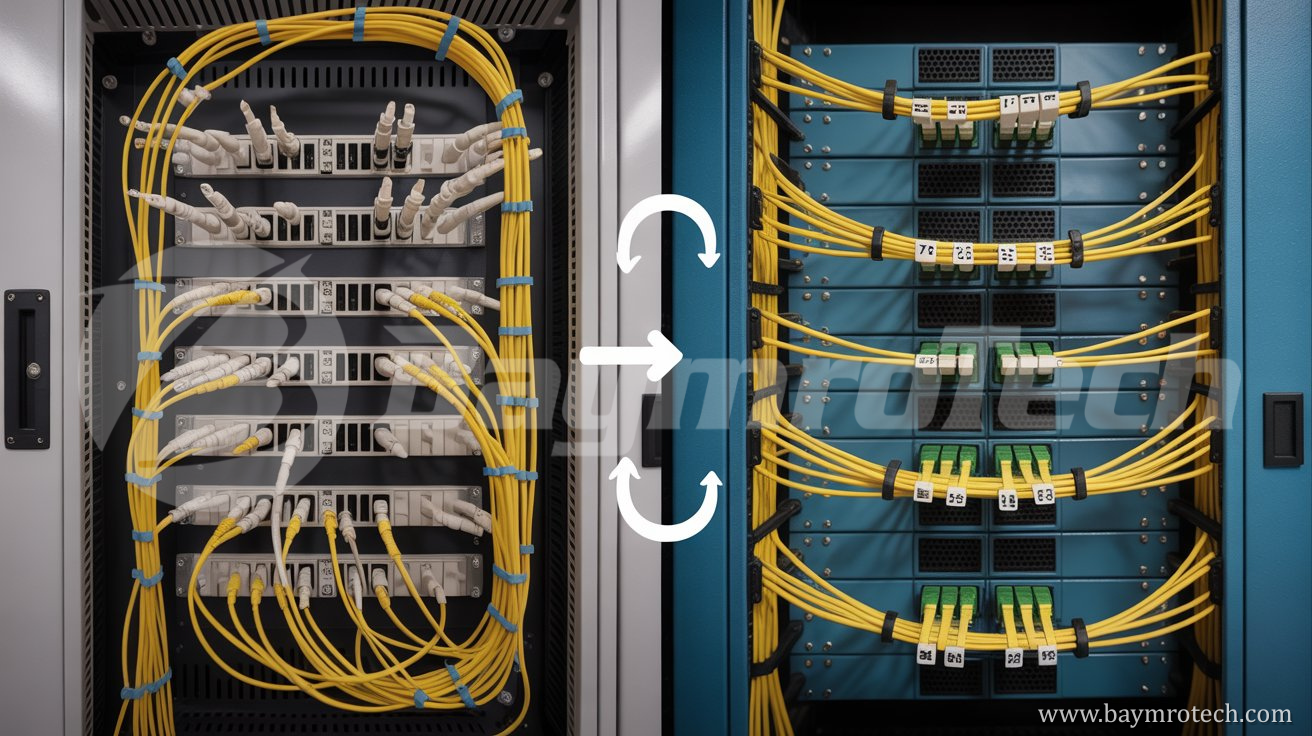
Ever opened a rack and found a spaghetti mess of cables? Disorganized routing isn’t just ugly—it makes maintenance a nightmare and increases the risk of accidental disconnection or damage63.
Avoid these pitfalls:
- Use cable trays, ties, and labels to keep everything neat.
- Plan your cable paths before installation and leave extra slack for future changes.
- Document your cable routes and connections for easy troubleshooting later4.
5. Ignoring Environmental Factors
Did you know that installing a fiber optic patch panel near sources of vibration, moisture, or dust can lead to premature failure67? Environmental hazards are often overlooked.
Keep in mind:
- Install panels in clean, dry, and stable environments.
- Use enclosures and grommets to protect against dust and water ingress6.
- For outdoor installations, choose panels with appropriate NEMA ratings7.
6. Underestimating the Importance of Documentation
It’s tempting to skip the paperwork, but poor documentation can cost you big when it’s time to expand or troubleshoot your network4.
Best practices:
- Label every cable and port clearly.
- Keep updated diagrams and records of your patch panel layouts.
- Store documentation where it’s easily accessible for your team.
7. Neglecting Safety Precautions
Fiber optic installation isn’t dangerous if you follow the rules—but skipping safety can lead to injuries or equipment damage.
Don’t forget:
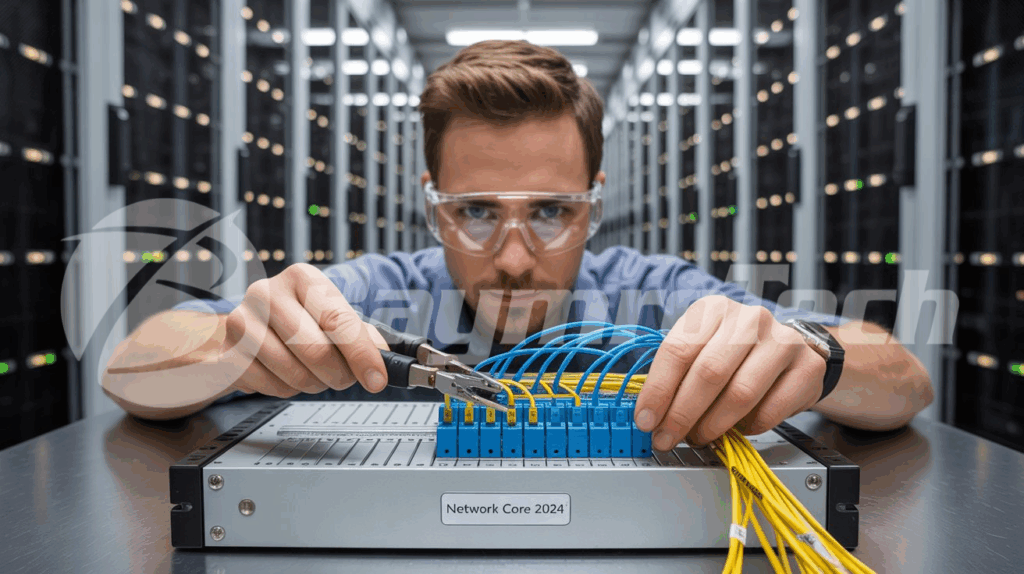
- Always wear eye protection when handling fibers8.
- Never look directly into fiber ends—laser light is invisible but harmful.
- Keep your workspace clean to avoid glass shards or debris.
Real-World Example: The Cost of Cutting Corners
A recent industry study found that improper installation accounts for nearly 60% of all fiber optic network failures3. One Baymro Technology client slashed installation time by 60% and reported zero post-installation issues simply by switching to pre-terminated cables and following best practices9. The lesson? A little extra care up front pays off in long-term reliability.
Quick Reference: Common Mistakes Checklist
- Mishandling or over-bending cables
- Skipping cleaning and testing
- Using mismatched connectors/adapters
- Poor cable management
- Ignoring environmental hazards
- Failing to document connections
- Overlooking safety protocols
Want to Learn More?
If you’re ready to upgrade your network or avoid costly installation mistakes, check out these helpful resources:
- Premium Fiber Optic Cable Manufacturer – Find the right cables for your next project.
- Top 5 Benefits of Using Pre-Terminated Fiber Optic Cables – Discover how pre-terminated solutions can save you time and money.
For more in-depth installation guidelines, see this comprehensive industry guide from Belden2 or explore best practices from RLH Industries7.
Conclusion: Set Yourself Up for Success
Installing a fiber optic patch panel doesn’t have to be stressful or risky. By avoiding the common mistakes above, you’ll ensure a reliable, high-performance network—without the headaches. Remember: handle cables with care, clean and test every connection, use the right components, keep things organized, and never underestimate the power of good documentation.
Ready to take your installation skills to the next level? Explore more tips and solutions on Baymro Technology’s blog, or reach out to our expert team for personalized advice. Have a story or tip to share? Drop your thoughts in the comments—we’d love to hear from you!