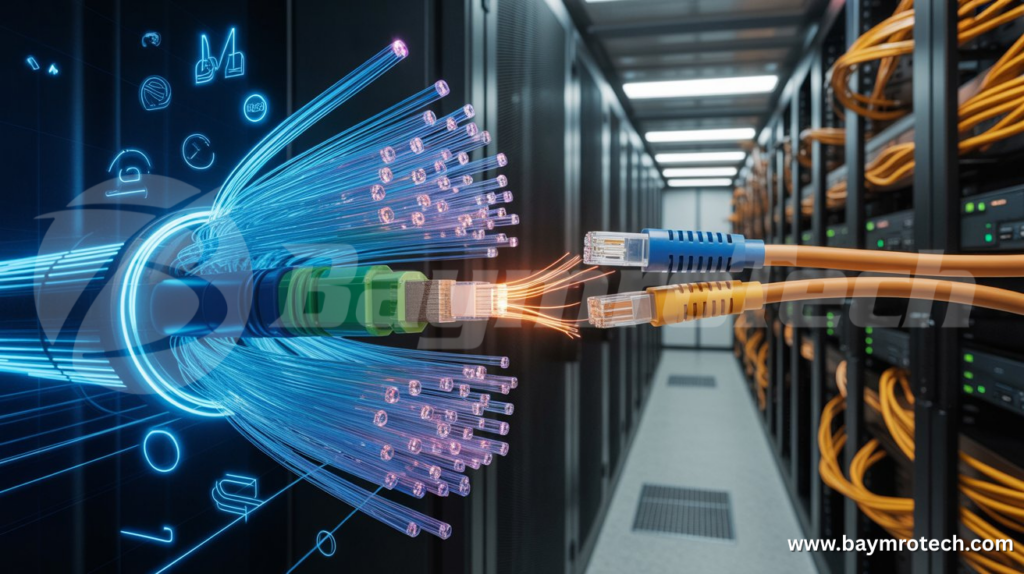
Ever frozen mid-Zoom call because your network lagged out, costing you a deal or a deadline? You’re not alone—millions of businesses grapple with outdated wiring that can’t keep up with 2026’s data explosion from AI tools, 8K streaming, and remote teams. In this post, we’ll break down fiber optic vs copper cable so you can pick the winner for your setup and future-proof your network.
Why Your Network Choice Matters Now
Data demands skyrocketed in 2025, with global IP traffic hitting 4.8 zettabytes annually—think endless cloud apps and VR meetings. Copper cables, the old reliable, struggle here, while fiber optic cables shine for speed and reliability. I’ve seen clients rip out copper after black Friday sales tanked from slow sites; switching to fiber fixed it overnight.
The real kicker? By 2026, 5G and edge computing make interference a nightmare for copper. Fiber laughs that off. Let’s dive into the showdown.
Speed and Bandwidth Breakdown
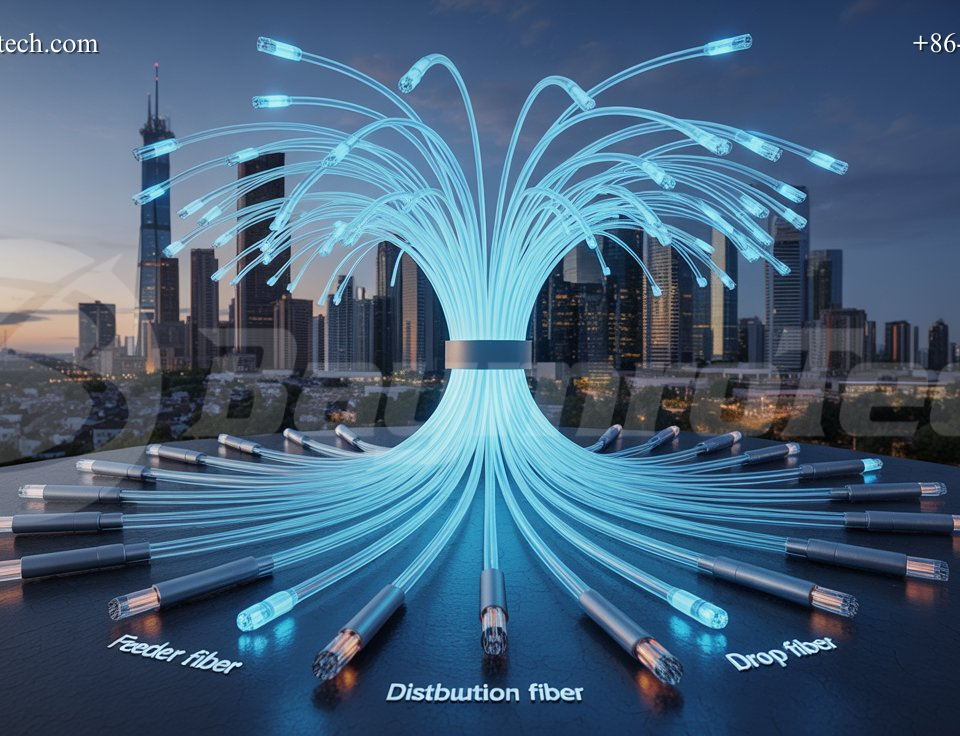
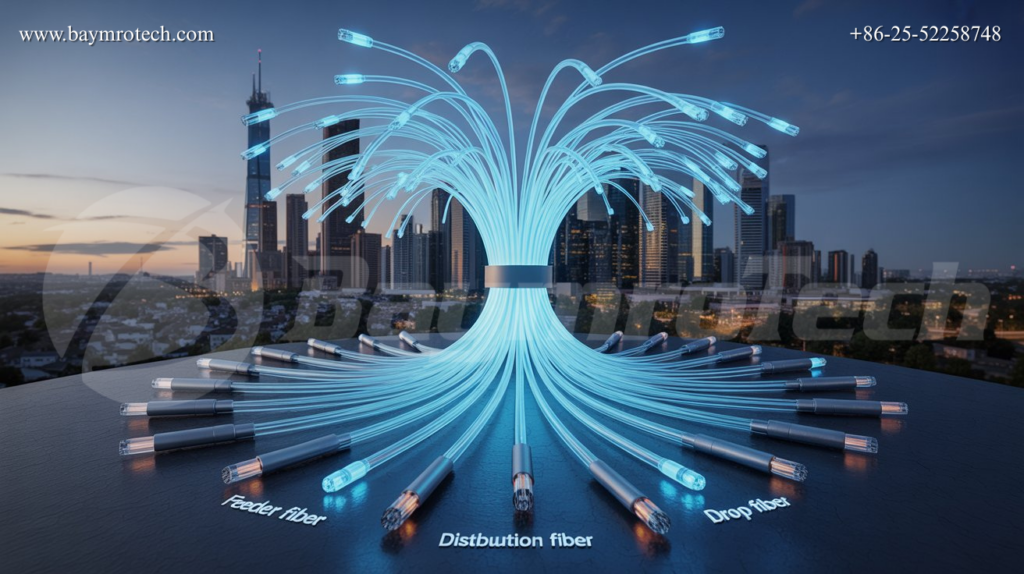
Fiber optic cables crush copper on raw performance. They use light pulses to zip data at up to 100 Gbps over kilometers, versus copper’s 10 Gbps cap on short runs.
- Fiber handles massive bandwidth—over 60 Tbps in top setups—for 4K video walls or AI training without breaking a sweat.
- Copper tops out quick; beyond 100 meters, signals degrade, forcing pricey repeaters.
Picture this: Your office streams 50 HD calls. Copper chokes; fiber sails. Humor me—copper’s like a ’90s dial-up in a Tesla world.
For businesses eyeing growth, check Baymro Tech’s copper vs fiber optic cables guide—it nails enterprise picks.
Distance and Reliability Face-Off
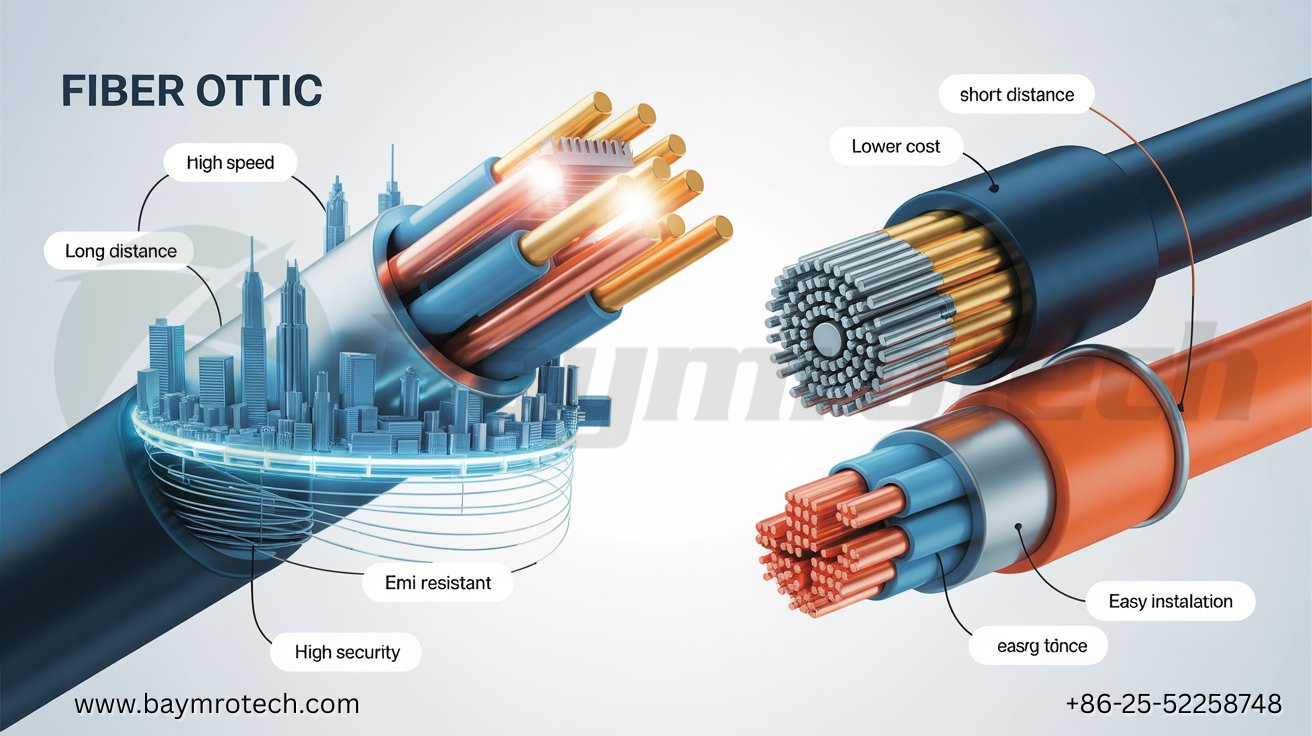
Copper shines short-range but fades fast. Electromagnetic interference from motors or Wi-Fi zaps its signal after 100 meters. Fiber? Up to 40 km with zero loss, immune to EMI.
Reliability stats tell the tale:
| Feature | Copper Cable | Fiber Optic Cable |
|---|---|---|
| Max Distance | 100m (Cat6) | 40km+ |
| EMI Resistance | Poor—needs shielding | Excellent—light-based |
| Signal Loss | High over distance | Negligible |
In factories, copper fails amid machinery noise; fiber thrives. A client once lost a week’s data to a power surge frying copper—fiber would’ve saved it.
Cost: Upfront vs Long-Term Wins
Copper wins the budget battle initially—Cat6 runs $0.20/meter installed, versus fiber’s $1–$2/meter. But factor in scalability: Copper upgrades mean rewiring soon. Fiber’s “pay once, win forever.”
- Short-term setups (home offices): Copper’s cheap and easy.
- Scaling networks: Fiber slashes repeaters, downtime costs—ROI in 2 years.
External cred: Cable Matters’ deep dive crunches numbers showing fiber’s edge for 2026 traffic. Don’t sleep on it—I’ve regretted skimping.
Security and Durability Edge
Hackers tap copper like phone lines; fiber’s light is tough to intercept without sparking alerts. Security? Fiber’s 100x harder to bug.
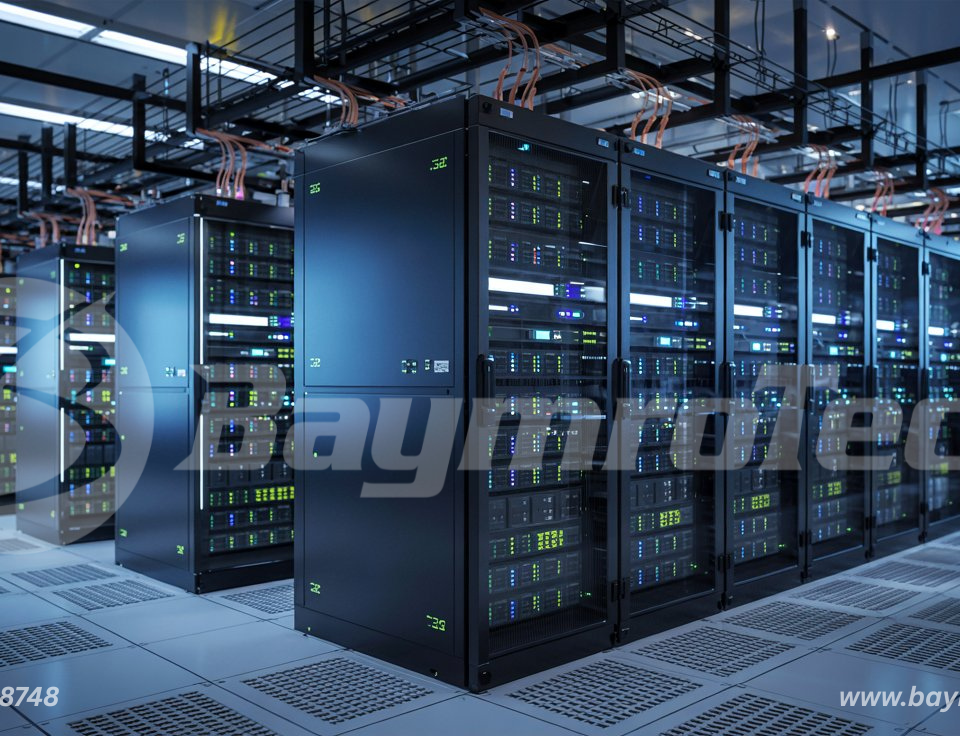
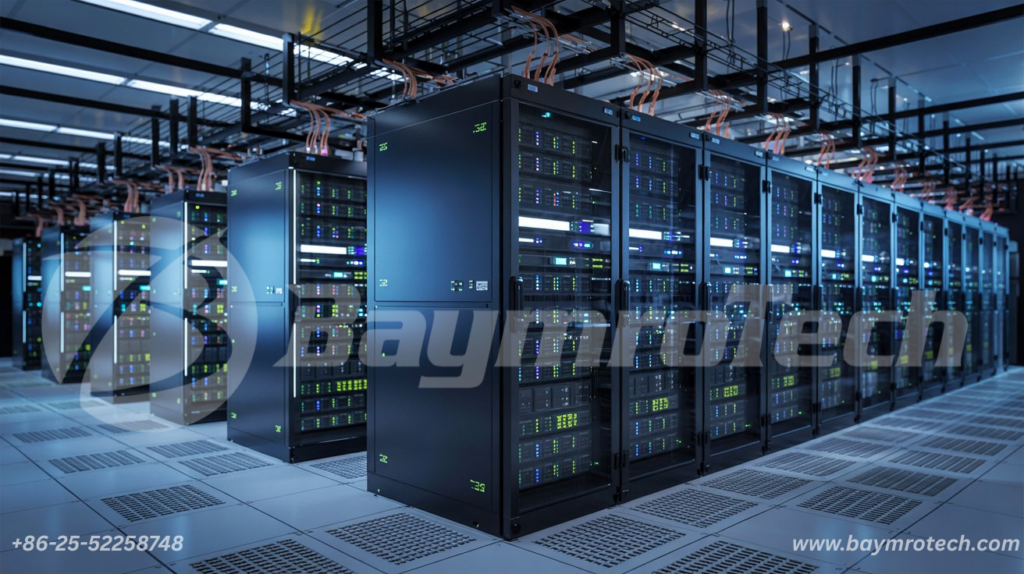
Durability favors fiber too—thinner, flexible, resists crushing better than copper’s bulky coils. In harsh spots like data centers, fiber lasts decades.
Pro tip: Pair fiber with splitters for secure branching. Baymro Tech’s PLC Splitter and Mini Splitter options boost efficiency without compromising safety.
2026 Trends: Fiber’s Taking Over
Industry forecasts predict 80% of new enterprise nets go fiber by 2027, driven by IoT and 6G prep. Copper lingers for legacy, but hybrids emerge—like copper to the desk, fiber backbone.
Check LS Networks’ 2025 fiber vs copper analysis for fresh stats. Smart move: Start with fiber runs now.
Ever dealt with a “quick fix” copper patch that snowballed? I have—swore off it. For high-density, Baymro’s ASB Box Splitter, LGX Splitter, and Rackmount Splitter integrate seamlessly, handling splits for massive throughput.
Real-World Scenarios: Pick Your Winner
- Small office (<50 users): Copper (Cat6a) for cost—reliable up to 10Gbps.
- Enterprise/warehouse: Fiber—distance, EMI-proof.
- Data-heavy (video, AI): Fiber all day.
Hybrid anecdote: A retailer I advised used fiber backbone with copper drops—best of both, minimal disruption.
Tools and Components for Fiber Success
Fiber needs splitters for PON nets. PLC Splitters divide signals loss-free; Mini Splitters fit tight racks. ASB Box and LGX handle outdoor/indoor; Rackmount for servers. These ensure your fiber net scales without waste.
Making Your Switch Seamless
Audit your needs: Bandwidth? Distance? Budget? Test speeds—under 1Gbps? Upgrade time.
Steps:
- Map runs—fiber where copper falters.
- Budget pros—get quotes.
- Install pros—Baymro Tech specializes.
Fiber or Copper: Your 2026 Verdict
Fiber optic edges copper for speed, distance, security, and future-proofing—ideal if you’re growing or data-intensive. Copper suits tight budgets and short hops. No one-size-fits-all; match to your pains.
Ready to upgrade? Contact Baymro Tech’s team for a free network audit. Drop your fiber vs copper stories below—what’s holding you back?