

Ever seen a data center grinding to a halt because of one tiny cable? It happens more often than you think. Fiber optic cable installation may seem straightforward, but small mistakes can lead to massive downtime, costly repairs, or poor network performance. If you’re working on a large electrical or communication project, avoiding these pitfalls can save you both time and serious money.
Let’s break down the ten most common mistakes—and how you can avoid them on your next installation.
1. Ignoring Bend Radius Limits
It’s tempting to bend cables around corners to fit your route—but fiber optics are far less forgiving than copper. Every type of cable has a minimum bend radius, and exceeding it can cause light signal loss or even break the delicate glass fibers inside.
Always check the manufacturer’s specifications for bend radius, and use proper cable guides or spools. Think of it as handling a fragile glass rod—it may seem flexible, but one sharp twist can ruin it.
2. Failing to Clean Connectors Properly
Here’s a fun (and frustrating) fact: 85% of fiber optic failures come from dirty connectors. A single speck of dust, smaller than you can see, can block data transmission entirely.
Before connecting, always clean the end faces using lint-free wipes and isopropyl alcohol or specialized cleaning pens. Never touch the ends with your fingers—oil residue is a hidden enemy. A few seconds of cleaning can save hours of troubleshooting.
3. Skipping Cable Testing
You wouldn’t drive a new car without testing the brakes, right? Yet, many installers skip performance testing after installation. Using an Optical Time Domain Reflectometer (OTDR) or power meter ensures that every segment performs as expected before you call the job done.
Testing helps you identify signal losses, reflections, or breaks early, rather than discovering them after activation when users start complaining.
4. Overpulling or Excessive Tension
Fiber optic cables might seem tough with their armored jackets, but they’re not designed to handle brute force. Pulling too hard can stretch or crack the internal fibers, leading to signal degradation.
Use a proper cable puller with tension monitoring and follow the manufacturer’s rated pulling strength. Slow and steady wins this race—forceful installation might look faster, but it costs more in the long run.
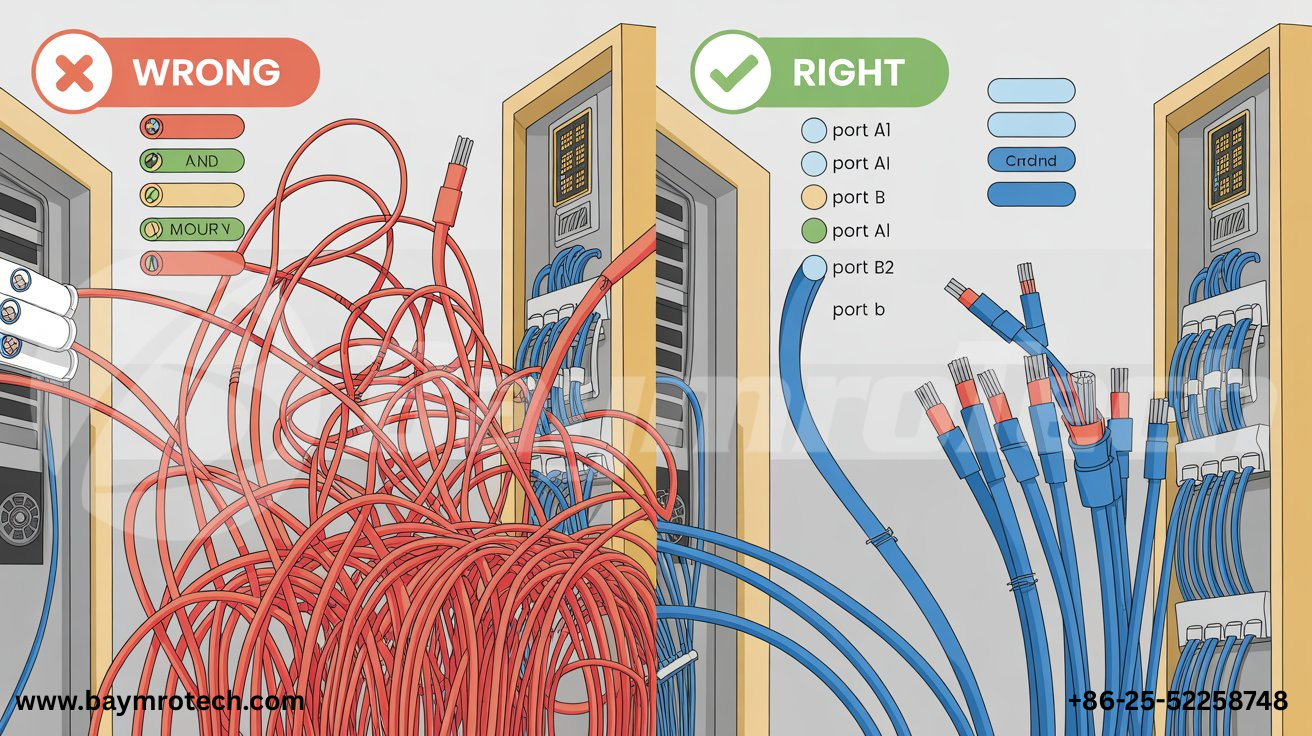
5. Poor Cable Routing and Management
It’s easy to underestimate how much space cables actually need. Overcrowded conduits, tight cable trays, or messy racks can make future maintenance a nightmare.
Plan your routing from the start. Label everything. Bundle cables neatly using Velcro ties, not plastic zip ties that can crush the jacket. Good cable management isn’t just about aesthetics; it’s about performance and serviceability.
For more detailed guidance on professional cable organization, visit our Electrical Cable Management Best Practices page.
6. Mixing Single-Mode and Multi-Mode Cables
This is one of those “rookie mistakes” that even experienced teams occasionally make. Single-mode and multi-mode fiber cables are not interchangeable—they use different light sources and have distinct performance characteristics.
Always verify the specs of your project before connecting cables. Using mismatched types can lead to huge signal losses and incompatibility with connected devices.
Need a refresher? Check out our article on Understanding Fiber Types and Applications.
7. Forgetting Proper Labeling and Documentation
You install hundreds of meters of fiber, terminate dozens of connectors, and everything works perfectly—until six months later, something fails, and no one knows which end connects where.
Label every cable, patch panel, and port clearly from the start. Maintain a simple documentation sheet that maps connections, routes, and test results. Future-you (or your technician) will thank you.
8. Skipping Physical Protection
Fiber optic cables are delicate and must be shielded from physical stress. Installing them in high-traffic areas without conduits or protective covers exposes them to vandalism, rodents, or accidental damage during maintenance work.
Whenever cables run outdoors or underground, use armored fiber or install within proper conduits. Follow NEC and Telcordia standards for additional safety. The Fiber Broadband Association offers updated guidelines worth reviewing.
9. Neglecting Temperature and Environmental Factors
Fiber optic cables perform best within specified temperature ranges. Installing in environments with high heat, cold, or moisture without considering protection can degrade performance or shorten lifespan.
Use cables rated for the conditions. For outdoor or industrial environments, choose gel-filled or loose-tube constructions that resist moisture and temperature extremes. Think ahead—your cable’s environment is just as important as its route.
10. Not Training or Supervising the Installation Crew
Even the best materials can fail if handled by untrained hands. Fiber optics require precision: proper stripping, splicing, polishing, and connectorization are skills learned through practice.
Invest in regular training sessions or certification courses for your crew. Resources like BICSI offer excellent programs that cover industry standards and best practices. A small investment in education leads to huge savings in rework and downtime.
The Bottom Line: Plan, Don’t Patch
A successful fiber optic cable installation doesn’t rely on luck—it’s built on planning, precision, and respect for the details. Avoiding these common mistakes means fewer service calls, higher data speeds, and happier clients.
If you’re working on a new electrical or data infrastructure project, Baymro Tech can help you get it right the first time. Visit our Fiber Installation Solutions section to explore tools, materials, and expert guidance designed to make your setup smoother and more reliable.
Let’s build a network that’s fast, reliable, and ready for the future—no patch jobs required.