Introduction
Telecom and data infrastructure projects are becoming more demanding as operators expand high-density networks, cloud connectivity, data centers, and AI-driven workloads. In this environment, a fiber optic adapter may look like a relatively small component, but its quality can directly influence connection stability, installation efficiency, maintenance requirements, and project reliability.
For procurement teams, selecting a fiber optic adapter manufacturer based only on unit price can create hidden costs. Inconsistent dimensions, poor alignment performance, inadequate testing, unstable lead times, or limited customization can result in installation delays, replacement requirements, field failures, and higher total cost of ownership.
The better approach is to evaluate the manufacturer as a long-term engineering and supply partner. Buyers should examine OEM capability, customization, certifications, testing procedures, optical performance, production capacity, technical support, and supply chain reliability before approving a supplier.
For telecom operators, system integrators, contractors, and infrastructure developers, supplier quality should therefore be treated as a strategic procurement decision rather than a simple price comparison.
What Is a Fiber Optic Adapter Manufacturer?
A fiber optic adapter manufacturer produces precision components used to align and connect two fiber optic connectors. These adapters, also called fiber optic couplers or mating sleeves in some applications, help maintain accurate connector positioning so that optical signals can pass efficiently between connected fibers.
Common configurations include adapters designed for connector types such as SC, LC, FC, and ST, with options that may include simplex, duplex, single-mode, multimode, and different housing or sleeve materials.
For B2B projects, optical performance is particularly important. Buyers should evaluate specifications such as insertion loss, return loss, alignment precision, ceramic sleeve type, and connector compatibility rather than assessing the adapter only by its physical appearance.
Key Technical Specifications Buyers Should Check
Insertion loss: Insertion loss indicates how much optical power is lost when the two connectors are coupled through the adapter. Lower insertion loss generally indicates more efficient optical coupling. Buyers should request the manufacturer’s specified insertion loss limits and confirm that the values are appropriate for the network application.
Return loss: Return loss indicates the amount of optical power reflected toward the source because of imperfections at the connection point. Higher return loss is generally desirable because it indicates lower reflected power. This specification becomes particularly important in networks where optical signal quality and reflection control are critical.
Ceramic sleeve type: The sleeve inside the adapter helps align the ferrules of the mating connectors. Ceramic sleeves are commonly selected for their dimensional stability and precision. Buyers should confirm the sleeve material and design because sleeve quality can influence alignment consistency and long-term connection performance.
Alignment precision: Precise alignment minimizes the lateral and angular offset between the connector ferrules. Poor alignment can increase optical loss and reduce connection consistency. A qualified manufacturer should be able to provide relevant alignment or dimensional specifications for the adapter configuration.
Connector compatibility: The adapter must be designed for the specific connector type and ferrule configuration used in the project. Compatibility should be confirmed before procurement rather than assumed from similar-looking connector designs.
These specifications provide a more meaningful basis for technical supplier comparison and should be included in the RFQ wherever applicable.
SC, LC, FC, and ST Connector Compatibility Differences
SC, LC, FC, and ST are not interchangeable simply because they perform the same basic connection function. Their physical construction, locking mechanisms, dimensions, and typical applications differ, so the adapter must match the connector design.
| Connector Type | Key Design Characteristic | Typical Application | Adapter Consideration |
| SC | Push-pull coupling with a relatively larger body | Telecom, FTTH, fiber distribution systems | Requires an SC-compatible adapter and appropriate alignment sleeve |
| LC | Compact push-pull design with a smaller form factor | Data centers, high-density patch panels | Requires LC-specific adapter dimensions and compatibility |
| FC | Threaded coupling mechanism | Telecom and applications requiring secure mating | Adapter must support the FC connector’s threaded design and ferrule alignment |
| ST | Bayonet-style locking mechanism | Legacy networks and some industrial or communication systems | Requires an ST-compatible adapter with the correct mating geometry |
The choice of adapter should therefore be based on the actual connector architecture used in the project. For example, an LC adapter should not be substituted for an SC adapter simply because both support fiber optic connections.
Buyers should also confirm whether the project uses single-mode or multimode fiber and whether simplex or duplex configurations are required.
Applications and Industry Use Cases
Fiber optic adapters are used throughout communications and structured optical infrastructure. Typical applications include:
Telecom Networks
Telecom operators use fiber optic adapters in distribution equipment, fiber termination systems, patching environments, and network cabinets. Consistent connector alignment is important where large numbers of connections must remain stable over long operating periods.
For these deployments, insertion loss and return loss should be considered alongside mechanical compatibility. An adapter that physically fits but does not provide the required optical performance may affect overall link quality.
Data Centers
Data centers require high-density fiber management and efficient patching. LC adapters are frequently used where rack space and port density are important considerations.
Because data center environments often prioritize high-density connectivity, buyers should verify LC adapter dimensions, alignment precision, sleeve quality, and optical performance before approving a supplier.
FTTH Infrastructure
Fiber-to-the-home deployments use adapters in termination boxes, distribution points, cabinets, and other access network equipment. High installation volumes make consistency and supply reliability particularly important.
SC adapters are commonly relevant to many access network configurations, so procurement teams should verify SC compatibility and ensure that the adapter meets the required optical and mechanical specifications.
Fiber Distribution Systems
Fiber distribution frames, optical distribution boxes, patch panels, and termination equipment depend on compatible adapters for organized and maintainable fiber connections.
FC adapters may be required for applications using threaded FC connectors, while ST adapters may be relevant for certain existing or specialized network environments.
Industrial and Infrastructure Projects
Industrial communication networks, transportation systems, utility infrastructure, and security networks may require adapters with specific environmental or mechanical characteristics.
In such projects, connector locking style, alignment accuracy, sleeve material, and environmental requirements should be evaluated together.
Different projects can require different connector types, materials, environmental ratings, certifications, packaging specifications, optical performance levels, and customization options. This is why supplier evaluation should go beyond checking whether a manufacturer has the right product name in its catalog.
What Buyer Decision Factors Matter Most?
1. OEM Manufacturing Capability
OEM capability is one of the first factors procurement teams should verify.
An actual OEM manufacturer generally has greater control over materials, production processes, tooling, inspection, packaging, and product modifications. This can be especially valuable when a project requires a customized adapter, private labeling, special dimensions, or integration with another optical component.
Buyers should ask whether the supplier manufactures the product directly or sources it from another factory. They should also clarify who controls quality when specifications change.
For long-term B2B programs, direct manufacturing capability can improve accountability and communication.
2. Customization Options
Standard products are not always suitable for every network design. Buyers may need different adapter colors, mounting configurations, flange designs, connector compatibility, ceramic sleeve specifications, packaging, labeling, or other project-specific modifications.
A manufacturer that can support customization can reduce the need for procurement teams to adapt their infrastructure around an inflexible component.
Before placing an order, provide the supplier with drawings, connector specifications, material requirements, performance expectations, and packaging instructions. A technically capable manufacturer should be able to review these requirements and identify potential production considerations.
3. MOQ Requirements
Minimum order quantity can have a major effect on project purchasing.
A very high MOQ may create unnecessary inventory exposure, especially for pilot deployments or projects involving multiple connector configurations. A very low MOQ may indicate a different production model and potentially higher unit costs.
Procurement teams should compare MOQ against forecasted demand, project phases, warehouse capacity, and expected replacement requirements.
4. Lead Time Stability
A quoted lead time is useful, but consistent delivery performance is more important.
Ask suppliers how they manage raw materials, production scheduling, inspection, packaging, and shipment preparation. A supplier that regularly misses delivery commitments can create installation delays even when its product quality is acceptable.
For infrastructure projects, buyers should consider both standard lead time and the supplier’s ability to support repeat orders.
5. Product Certifications
Depending on the application and destination market, buyers may require specific compliance documentation or product certifications.
Instead of accepting general statements such as “international quality,” procurement teams should request relevant certificates and determine whether they apply to the exact product configuration being purchased.
Certification requirements can vary according to application, market, material, and project specifications, so they should be confirmed during technical qualification.
6. Testing Reports
Testing documentation provides evidence that the product has been evaluated against defined requirements.
For fiber optic adapters, buyers should pay particular attention to test data related to insertion loss, return loss, alignment accuracy, dimensional consistency, connector compatibility, and relevant environmental performance.
Testing should not be treated as a paperwork exercise. Procurement teams should understand what is tested, the applicable acceptance criteria, testing frequency, and whether reports relate to production batches or representative samples.
A manufacturer that can provide clear test documentation gives buyers stronger evidence for technical qualification.
7. Quality Control Procedures
Quality control should cover the entire manufacturing process rather than only final inspection.
Procurement teams should understand how incoming materials are checked, how ceramic sleeves and other components are controlled, how production parameters are monitored, how alignment accuracy is verified, and how finished products are inspected before shipment.
A documented quality process can reduce variation between batches, which is particularly important for projects involving large quantities of identical components.
8. Technical Support Capability
Technical support becomes important when a project involves customized products, unusual connector requirements, drawings, or installation considerations.
A supplier should be able to communicate with engineering and procurement teams clearly. Fast responses to specification questions can prevent incorrect orders and reduce project delays.
For B2B buyers, technical communication should be considered part of supplier performance, not an optional service.
9. Production Capacity
A supplier may deliver a small sample order successfully but struggle when project volume increases.
Ask about production capacity, manufacturing equipment, workforce organization, inspection resources, and the supplier’s ability to handle repeat orders.
Capacity matters particularly for telecom rollouts and infrastructure programs where demand may increase rapidly after initial qualification.
10. Supply Chain Reliability
Manufacturing capability alone does not guarantee reliable delivery. The supplier also needs stable access to materials, components, ceramic sleeves, packaging, and logistics resources.
Procurement teams should evaluate whether the manufacturer has appropriate supply chain planning and contingency measures. Reliable sourcing can reduce the risk of unexpected production interruptions.
11. Project References
Relevant project experience can provide useful evidence of supplier capability.
Ask whether the manufacturer has supplied similar products for telecom networks, data centers, FTTH deployments, fiber distribution equipment, or other infrastructure applications.
Project references can help buyers determine whether the supplier understands high-volume B2B requirements rather than only small-scale commercial orders.
What Procurement Risks Should Buyers Avoid?
Choosing a supplier without sufficient technical and commercial verification can create several risks.
No OEM Capability
If the supplier depends heavily on third-party factories, buyers may have less control over product changes, quality consistency, and delivery schedules.
No Test Reports
Without appropriate testing documentation, procurement teams may have difficulty verifying whether the product meets the project’s technical requirements, including insertion loss, return loss, and alignment precision.
No Customization Support
A supplier that only offers fixed catalog products may struggle when the project requires specific connector compatibility, dimensions, mounting arrangements, materials, ceramic sleeve configurations, labeling, or packaging.
Unstable Lead Times
Unpredictable delivery can affect installation schedules, warehouse planning, contractor coordination, and project completion.
Limited Technical Support
Poor communication can lead to specification misunderstandings, incorrect connector selection, incompatible adapters, and unnecessary engineering revisions.
Inconsistent Quality Control
Batch-to-batch variation can increase installation problems, field replacements, inspection costs, and maintenance requirements. In particular, inconsistent alignment precision or sleeve dimensions can negatively affect optical connection performance.
These risks demonstrate why the lowest quotation is not always the lowest-cost procurement option. Buyers should evaluate the supplier’s total value, including quality, optical performance, connector compatibility, delivery reliability, technical support, customization capability, and lifecycle cost.
Practical Fiber Optic Adapter Procurement Checklist
| Buyer Evaluation Factor | What to Confirm | Why It Matters |
| OEM capability | Direct manufacturing and production control | Improves accountability and customization |
| Insertion loss | Specified maximum loss and test method | Helps evaluate optical coupling efficiency |
| Return loss | Required return loss and test data | Helps assess reflected optical power |
| Ceramic sleeve | Sleeve material, type, and dimensional consistency | Supports stable connector alignment |
| Alignment precision | Alignment or dimensional specifications | Helps reduce optical loss |
| Connector compatibility | SC, LC, FC, ST and required configuration | Prevents mechanical incompatibility |
| MOQ | Minimum order and repeat-order terms | Supports inventory planning |
| Lead time | Standard and project-specific delivery schedule | Reduces project delays |
| Certifications | Applicable product and compliance documents | Supports technical qualification |
| Testing reports | Product inspection and test records | Provides quality evidence |
| Customization | Dimensions, materials, labeling, packaging, configurations | Supports project-specific requirements |
| Technical support | Engineering communication and specification review | Reduces ordering errors |
| Quality control | Incoming, in-process, and final inspection | Improves batch consistency |
| Project references | Relevant telecom and infrastructure experience | Helps validate supplier capability |
| Supply chain stability | Material sourcing and production continuity | Reduces supply disruption risk |
Procurement teams can use this checklist during RFQ evaluation, supplier audits, technical qualification, and final vendor selection.
Why Consider BaymroTech for B2B Fiber Optic Adapter Supply?
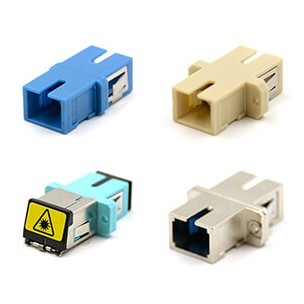
BaymroTech approaches fiber optic adapter supply from an OEM and engineering perspective. For B2B buyers, this means the discussion can focus on actual project requirements rather than simply selecting a product from a standard catalog.
BaymroTech’s fiber optic adapter solutions can support procurement discussions involving product specifications, customization requirements, optical performance, connector compatibility, order quantities, and project applications.
For telecom operators and system integrators, an engineering-focused supplier can make it easier to communicate technical requirements and assess whether a particular configuration is appropriate for the intended deployment.
When evaluating a BaymroTech fiber optic adapter solution, buyers can discuss requirements such as SC, LC, FC, or ST compatibility, ceramic sleeve specifications, insertion loss, return loss, alignment precision, packaging requirements, lead times, and project quantities.
BaymroTech can also be considered when procurement teams need an OEM manufacturing partner for repeat B2B requirements. Buyers can discuss connector configurations, project quantities, packaging requirements, optical specifications, lead times, and other requirements before finalizing an order.
The objective should be to establish a supplier relationship that supports both the immediate RFQ and future project requirements.
Frequently Asked Questions
What is a fiber optic adapter?
A fiber optic adapter is a precision component used to align and connect two compatible fiber optic connectors while maintaining stable optical coupling.
What is insertion loss in a fiber optic adapter?
Insertion loss is the optical power lost when light passes through the connected adapter and mating connectors. Lower insertion loss generally indicates more efficient optical coupling.
What is return loss?
Return loss measures the amount of optical power reflected toward the source at the connection. Higher return loss generally indicates lower reflected power and better connection performance.
Why is a ceramic sleeve used in a fiber optic adapter?
A ceramic sleeve helps align the ferrules of mating connectors. Its dimensional stability and precision can support consistent alignment and optical performance.
Why is alignment precision important?
Alignment precision controls how accurately the connector ferrules are positioned. Poor alignment can increase insertion loss and reduce connection consistency.
Are SC, LC, FC, and ST adapters interchangeable?
No. SC, LC, FC, and ST connectors have different physical designs and coupling mechanisms. Buyers should select an adapter specifically designed for the connector type used in the project.
Can fiber optic adapters be customized?
Yes. Depending on the manufacturer, customization may include connector configuration, housing design, mounting features, materials, sleeve specifications, color, labeling, and packaging.
What certifications should buyers request?
Buyers should request certifications and compliance documents relevant to the specific product, application, destination market, and project requirements.
What should buyers ask about lead time?
Ask for standard production lead time, sample lead time when applicable, repeat-order lead time, production capacity, and the supplier’s approach to managing high-volume orders.
How can buyers verify supplier quality?
Request product specifications, test reports, quality procedures, certifications, inspection information, samples, and relevant project references. A supplier audit may also be appropriate for larger programs.
What information should be included in an RFQ?
An RFQ should ideally include connector type, configuration, quantity, insertion loss and return loss requirements, alignment specifications, ceramic sleeve requirements, material requirements, drawings if applicable, packaging requirements, certifications, delivery location, target schedule, and customization needs.
Start Your Fiber Optic Adapter RFQ With the Right Specifications
Selecting a fiber optic adapter manufacturer should begin with the project’s technical and procurement requirements. Share your OEM expectations, connector configurations, optical performance requirements, customization needs, MOQ, delivery schedule, certifications, testing requirements, and application details with potential suppliers.
A structured RFQ allows manufacturers to provide a more accurate quotation while helping procurement teams compare suppliers on quality, optical performance, connector compatibility, delivery, and long-term value rather than unit price alone.
For project-specific fiber optic adapter requirements, contact BaymroTech to discuss OEM manufacturing, customization, MOQ, lead time, optical specifications, and engineering requirements.
Ready to reduce supplier risk and identify the right fiber optic adapter solution for your next telecom or infrastructure project? Contact BaymroTech today to discuss your specifications and request a qualified RFQ.