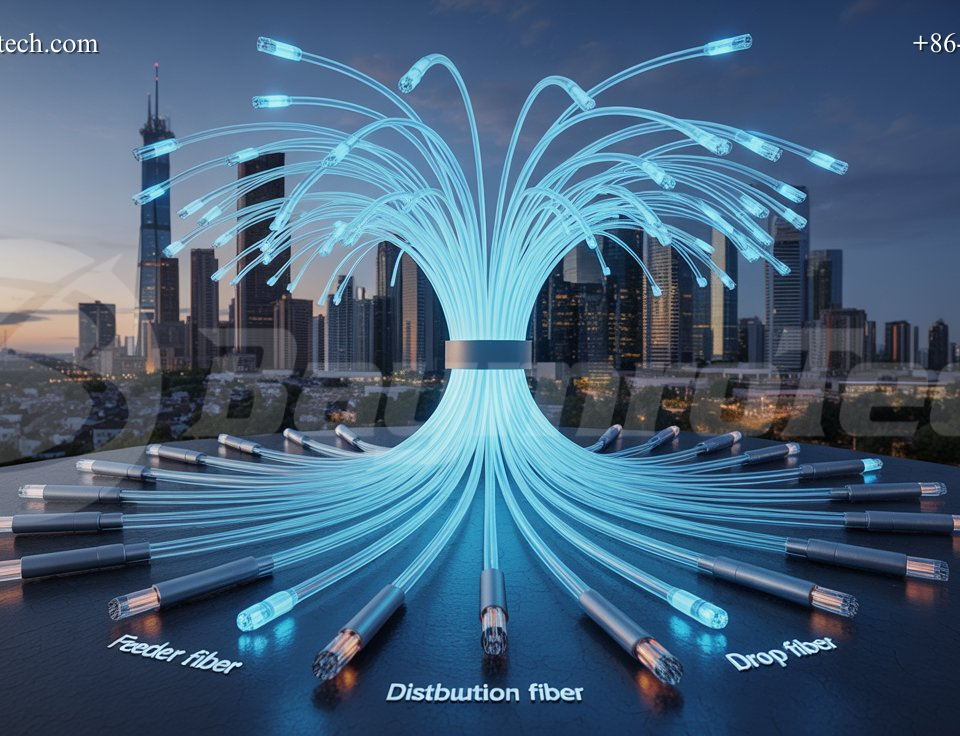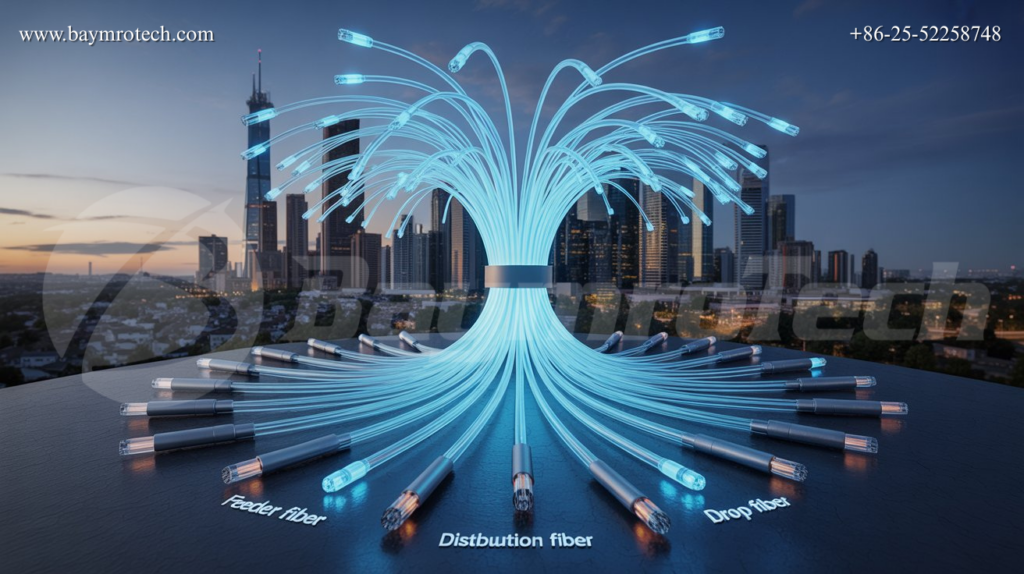

Imagine streaming a 4K movie on your phone without a single glitch, downloading massive files in seconds, or powering self-driving cars that react instantly— that’s the promise of 5G, now exploding worldwide with over 2.25 billion connections as of 2024. But here’s the catch: without rock-solid backhaul infrastructure, all that speed fizzles out like a bad connection at a concert. You’re probably wondering how to keep up with this surge without breaking the bank or your network’s back. Stick with me— we’ll dive into why 5G demands fiber optic backhaul like never before, spotlighting game-changers like the fiber optic patch cord, and show you practical ways to future-proof your setup.
The 5G Explosion: Why Backhaul Can’t Keep Up with Copper
5G isn’t just faster internet; it’s a data tsunami. Global 5G population coverage hit around 60% by late 2025, with small cells popping up everywhere to blanket cities and suburbs. These tiny towers handle massive MIMO tech, pushing 10x more data than 4G, but they need backhaul—the “highway” linking cell sites to the core network—to carry that load without choking.
Copper cables? Forget it. They cap out at gigabit speeds and suffer signal loss over distance, leaving you with laggy VR calls or dropped IoT feeds. Fiber optics step in as the hero, offering near-limitless bandwidth (up to 400Gbps with OM5 cables) and latency under 1μs—perfect for real-time apps like remote surgery. Picture this: a rural hospital relying on 5G for telemedicine. Without fiber backhaul, delays could be deadly. We’ve seen operators slash energy use by 30% switching to fiber, saving millions yearly.
- Skyrocketing demand stats: 5G wireless backhaul market jumps from $2.7B in 2025 to $5.7B by 2030 at 16% CAGR, fueled by small cell frenzy.
- Global scale: 354 commercial networks live, North America at 77% population coverage.
- Humor break: If 5G is the sports car, copper backhaul is training wheels—cute, but not for the highway.
Fiber’s Edge: Bandwidth, Reliability, and Cost Wins Over Microwave
Why fiber optic backhaul specifically? Microwave works for quick rural deploys, but 5G’s dense urban grids demand more. Fiber crushes it with unlimited capacity, weather-proof reliability, and scalability for slicing networks (think dedicated lanes for gaming vs. video).
Check this quick comparison—fiber wins hands-down for 5G’s high-stakes world:
Hybrid setups blend both, but fiber dominates—projected to outpace wireless links through 2028. For credibility, Ericsson’s Mobility Report forecasts 85% global coverage outside China by 2031, all riding fiber waves. And Dell’Oro Group’s analysis predicts 12% annual growth in backhaul gear, with fiber leading.
Ever deployed microwave in a storm-prone spot? I have—nightmare. Fiber laughs at rain, powering consistent 5G for smart cities.
Enter Fiber Optic Patch Cords: The Unsung Heroes of 5G Connections
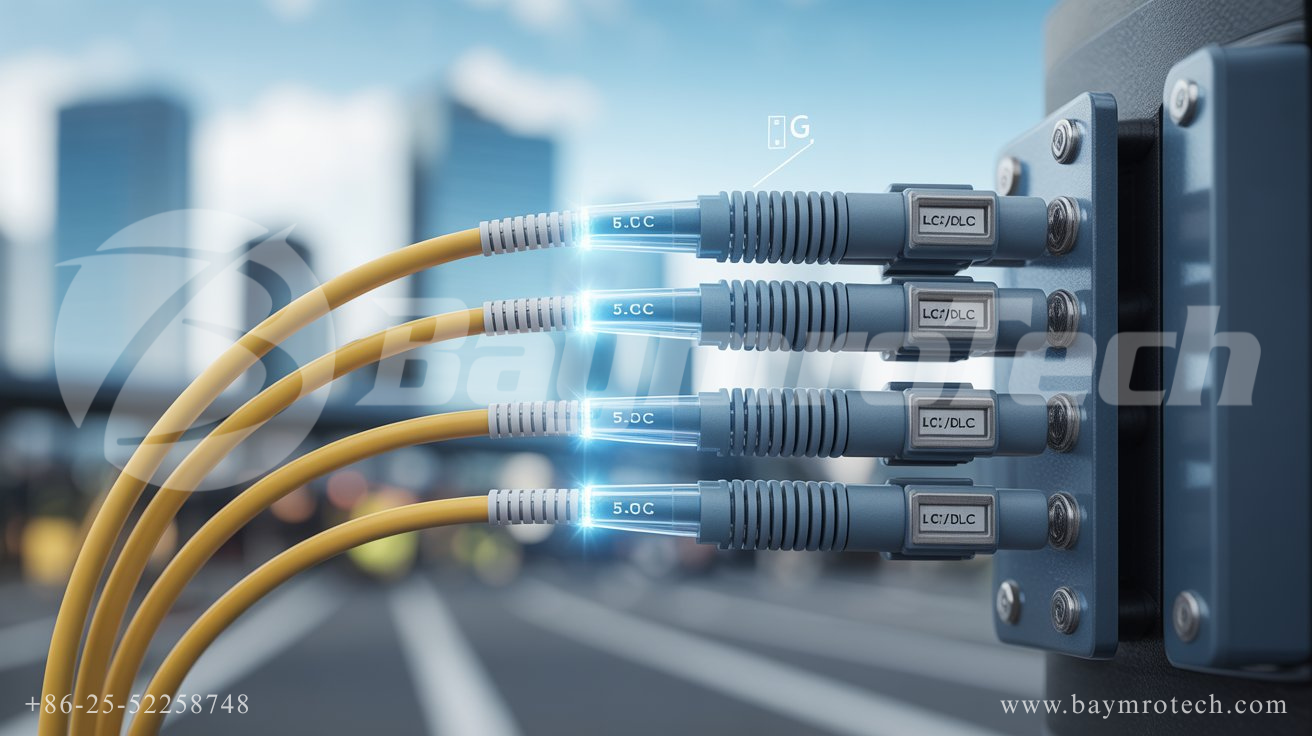
Now, the star: fiber optic patch cords. These aren’t your grandma’s cables—they’re rugged jumpers linking baseband units (BBU) to remote radio units (RRU) in FTTA setups, handling CPRI/eCPRI data at 10Gbps+. In 5G base stations, a single fiber optic patch cord with DLC connectors and IP67 armor thrives outdoors, braving harsh weather while syncing IQ signals flawlessly.
Why the hype? 5G’s massive MIMO arrays need ultra-low loss (PC/UPC/APC polish) and high repeatability—patch cords deliver, cutting interference vs. old coax. Baymro Tech’s versions support SM/MM fiber, custom lengths, and connectors like LC/SC, ideal for metro nets or data centers. Pro tip: Pair with our fiber optic cables for end-to-end wins.
Relatable story: A telco buddy upgraded to armored patch cords for urban 5G—deployment time halved, downtime vanished. “It’s like giving your network superpowers,” he joked.
Tackling 5G Backhaul Hurdles Head-On
5G rollout isn’t all smooth—backhaul costs soar in cities, small cells multiply connections (up to 10x), and slicing demands QoS per app. Solutions? NFV/SDN for smart sharing, plus mmWave hybrids where fiber digs are pricey. Energy hogs? Fiber’s 2-63% efficiency edge over alternatives seals the deal.
Operators like those in Rockford saved big via fiber, boosting capacity without outages. Check 5G Americas’ 2025 report for the full growth story—72 SA networks live.
Future-Proof Your Network Today
5G’s fiber optic backhaul boom—driven by 2.25B connections, small cell density, and gigabit hungers—means massive demand for reliable gear like patch cords. You’ve got the stats: exploding markets, unbeatable fiber perks, and real-world wins.
Ready to ride the wave? Explore Baymro’s fiber optic patch cords or hit up our team at jacky.cheung@baymrotech.com for custom quotes. Drop a comment—what’s your biggest 5G backhaul headache?